Science's Greatest Mysteries: Is There Intelligence in the Universe (Part 4)
Description
Humanity has always sought meaning in its existence, both as individuals and as a species. The most fundamental questions have haunted us since the dawn of history: Are we here for a reason? What is our purpose? Is there a point to life beyond physical survival, and what awaits us at its end? These questions become even more complex and exhilarating when we turn our gaze toward the heavens. In this episode, we embark on a philosophical and scientific journey to address the ultimate question: Amidst the cosmic infinity that surrounds us, are we truly alone? For decades, scientists and astrophysicists have scanned the reaches of the galaxy using powerful radio telescopes through projects like SETI, searching for signs of intelligent signals. While we now know there are billions of planets similar to Earth within the "Goldilocks Zone"—the region capable of supporting liquid water—the silence from space remains deafening. The famous Fermi Paradox presents us with a troubling riddle: If the universe is so vast, with countless suns and planets far older than our own, why haven't we met anyone yet? The possibility of extraterrestrial intelligence is no longer relegated to science fiction; it has become a serious field of study within academia and space agencies. The discovery of exoplanets has deepened our understanding that life as we know it may be just one model among a vast array of biological possibilities. This episode examines various theories—from the "Great Filter," which suggests civilizations tend to destroy themselves before they can make contact, to the possibility that intelligent life is simply so different from us that communicating with it requires tools we have yet to develop. Join us for the fourth episode of "The Great Mysteries of Science," where we dive into the intersection of astronomy, religion, and philosophy. We explore how the discovery of other life—or the realization that we are indeed one of a kind—would forever change how we perceive ourselves, our moral values, and the future of humanity among the stars. Is intelligence a rare cosmic accident, or is it an inherent part of the universe's natural laws?
Original title
התעלומות הגדולות של המדע: האם קיימת בינה ביקום? (פרק 4)
מאז ומעולם חיפש האדם משמעות לקיומו, הן כיצור פרטי והן כחלק מהמין האנושי כולו. השאלות היסודיות ביותר המלוות אותנו משחר ההיסטוריה – האם אנחנו כאן מסיבה מסוימת? מה עלינו לעשות בחיינו? האם יש להם טעם מעבר לקיום הפיזי ומה מצפה לנו בסופם? – הופכות מורכבות ומסעירות עוד יותר כאשר אנו נושאים את עינינו אל כיפת השמיים. בפרק הזה אנו יוצאים למסע פילוסופי ומדעי בשאלה הגדולה מכולן: האם בתוך האינסוף הקוסמי המקיף אותנו, אנחנו באמת לבד? במשך עשרות שנים, מדענים ואסטרופיזיקאים סורקים את מרחבי הגלקסיה באמצעות טלסקופי רדיו עוצמתיים במסגרת פרויקטים כמו SETI, בחיפוש אחר אותות תבוניים. בעוד שאנו יודעים כיום שישנם מיליארדי כוכבי לכת בדמיון מסוים לכדור הארץ באזור "הנסיכה והדובים" (האזור המאפשר קיום מים נוזלים), השתיקה מהחלל נותרה מהדהדת. פאראדוקס פרמי המפורסם מציב בפנינו את השאלה המטרידה: אם היקום כל כך עצום ויש בו אינספור שמשות ופלנטות עתיקות משלנו, מדוע עדיין לא פגשנו איש? האפשרות לקיומה של תבונה חוץ-ארצית אינה רק עניין של מדע בדיוני, אלא הופכת לנושא מחקר רציני באקדמיה ובסוכנויות החלל. גילויי ה"אקסו-פלנטות" (כוכבי לכת מחוץ למערכת השמש) העמיקו את ההבנה שהחיים כפי שאנו מכירים אותם עשויים להיות רק מודל אחד מתוך מגוון אפשרויות ביולוגיות. הפרק בוחן את התיאוריות השונות – החל מ"המסנן הגדול" שטוען שציוויליזציות נוטות להשמיד את עצמן לפני שהן מצליחות ליצור קשר, ועד לאפשרות שהחיים התבוניים פשוט שונים כל כך מאיתנו, שהתקשורת איתם דורשת כלים שעדיין לא פיתחנו. הצטרפו אלינו לפרק הרביעי בסדרה "התעלומות הגדולות של המדע", בו נצלול אל התפר שבין אסטרונומיה, דת ופילוסופיה. נבחן כיצד הגילוי של חיים אחרים – או ההבנה שאנו אכן יחידים במיננו – ישנו לעד את הדרך שבה אנו תופסים את עצמנו, את ערכי המוסר שלנו ואת עתידה של האנושות בין הכוכבים. האם התבונה היא תאונה קוסמית נדירה, או שמא היא חלק בלתי נפרד מחוקי הטבע של היקום?
תמלול הסרטון
לסרטון זה אין כתוביות זמינות ביוטיוב.
ניתן ליצור תמלול מקורב באמצעות AI על בסיס פרטי הסרטון.
Related Videos

History's Greatest Mysteries Season 5 premieres March 19 on History Channel
Join us for a fascinating journey into the depths of the past in the brand-new fifth season of "History's Greatest Mysteries." Hosted by Emmy Award winner Laurence Fishburne, the series continues to investigate the lingering questions left behind by great civilizations, influential leaders, and the events that reshaped humanity. In every episode, we pursue the truth using advanced forensic technology, analysis of formerly classified documents, and the unveiling of never-before-seen evidence, all aimed at shedding light on ancient myths and unsolved modern mysteries. History as we know it is full of "black holes"—from the JFK assassination and the disappearance of Amelia Earhart to the secrets buried within the pyramids of Egypt or Stonehenge. This season, we dive deep into mysterious events, weighing conspiracy theories against scientific facts, as we try to determine if we are closer than ever to cracking the codes of the past. Is it possible that new archaeological discoveries will force us to rewrite the history books? The series features international experts, historians, and investigators who have dedicated their lives to uncovering the dark and unknown side of our reality. Beyond its scientific and investigative value, "History's Greatest Mysteries" offers a breathtaking cinematic look at the world's greatest dramas. Each episode is a complex puzzle composed of testimonies, dramatic recreations, and human stories that spark inspiration and curiosity. This is more than just a history lesson; it is an intellectual experience that explores the fine line between fact and fiction and the ways in which the past continues to shape our present. Don't miss the opportunity to expand your horizons and discover what really happened. Subscribe now to the official History Channel YouTube channel to stay updated on all new content, documentaries, and exclusive reveals. Follow us on social media for further discussions, behind-the-scenes footage, and information on all the mysteries still waiting to be solved. Subscribe to the channel: http://www.youtube.com/HistoryChannelIsrael Follow History Channel Israel on Facebook: https://www.facebook.com/HistorylIsrael
Progress and Its Complications with Dr. Noga Efrati
The captivating seminar "The Labors of Progress," featuring Dr. Noga Efrati, dives into one of the most ancient and intriguing questions to haunt humanity: Are we alone in the universe? As modern science takes giant leaps in deep space exploration, the fourth episode of the series "Science’s Greatest Mysteries" examines this issue through a broad lens—combining astrophysics, biology, and statistical probability—while attempting to grasp the implications that discovering extraterrestrial intelligence would have on human culture and progress. The Search for Extraterrestrial Intelligence (SETI) is not merely the domain of science fiction, but a serious field of research engaging the world’s greatest minds. Throughout the lecture, key concepts such as the "Fermi Paradox" are explored—the famous question posed by physicist Enrico Fermi: "If there are so many stars and the potential for life is so high, where is everybody?" The session discusses the unique conditions that allowed life to emerge on Earth and the possibility of a "Great Filter"—an evolutionary or technological barrier that prevents civilizations from surviving over the long term or achieving interstellar contact. Beyond the technical aspects and advanced instrumentation, Dr. Noga Efrati and the participants examine the philosophical and historical significance of "progress." Does accelerated technological development inevitably lead to prosperity, or does it carry the seeds of self-destruction? The discussion raises poignant questions about how modern science attempts to bridge the gap between our limited knowledge and the mysterious infinity of the cosmos, referencing recent discoveries of Earth-like exoplanets that have reignited the human imagination. This recording from Tel Aviv University’s TAUVOD channel serves as a window into a profound academic discussion made accessible to the general public. It invites viewers to question the obvious, acknowledge the complexity of exploring the unknown, and realize that the answer to whether intelligence exists elsewhere in the universe may forever change how we perceive ourselves, our future, and our place within the vast cosmic tapestry.
History's Greatest Mysteries • New Season • Sundays 9:45 PM from March 16
In every generation, humanity attempts to unravel the same unanswered riddles—moments in time that altered the course of history and left behind echoing questions. From the mysterious disappearances of entire civilizations to lost treasures and global conspiracies, the series "History's Greatest Mysteries" returns for a new season to dive deep into the most fascinating cases. Utilizing advanced forensic technology, the declassification of secret documents, and analysis from leading experts, we seek to separate myth from reality and shed new light on events previously deemed unsolvable. The new season takes us on a journey across continents and eras. Will we finally discover the fate of the flight that vanished without a trace, or uncover the most guarded secrets of mysterious military installations? History is not merely a collection of dry facts; it is filled with black holes of uncertainty, and we are here to fill them. Each episode re-examines existing evidence and presents innovative theories that may rewrite what we thought we knew about our past, featuring dramatic recreations and exclusive access to excavation and research sites around the globe. Beyond the thrills and discoveries, the series engages with philosophical questions about human nature and our perpetual search for truth. Why do certain mysteries continue to captivate us decades or even centuries after they occurred? The answer lies in the fact that history is a living laboratory, where every new piece of information can shift our worldview. Join us for an uncompromising investigation where every small detail could be the key to solving humanity’s greatest puzzles. Don’t miss the new episodes that will make you question everything you thought you knew. Join us every Sunday at 21:45, starting March 16, for a journey into the unknown. Subscribe to the channel: http://www.youtube.com/HistoryChannelIsrael Follow History Channel Israel on Facebook: https://www.facebook.com/HistorylIsrael
Unsolved Mysteries Throughout History
Are there layers of reality from the eyes of historians and scientists? For millennia, humanity has accumulated documented knowledge, yet alongside the dry facts remain countless open questions, baffling archaeological finds, and evidence that challenges our conventional perception of the human timeline. This lecture embarks on a fascinating journey tracing the mysteries concealed between the pages of history, exploring whether the story we know is merely the tip of the iceberg of a far grander and more complex drama. During our session, we will dive into enigmas that lack a satisfying explanation: from ancient megalithic structures built with engineering precision impossible for their time, to encrypted manuscripts that no one has managed to decode, and historical anomalies that hint at the existence of lost technologies or civilizations erased from the sands of time. We will examine how recent discoveries are forcing the scientific community to repeatedly update what we thought we knew about the dawn of civilization and the capabilities of our distant ancestors. Beyond the scientific facts, we will discuss the philosophical and existential questions arising from these mysteries. What causes certain information to be preserved while other data is marginalized or intentionally omitted? Is it possible that history, as it is taught today, is the product of cultural filtering, and what can we learn from these "black holes" in our collective memory? We will analyze the link between ancient myths and physical reality, trying to understand if the truth often lies precisely where mainstream science chooses not to look. This is an intellectual journey that does not settle for easy answers, but rather encourages critical thinking and boundless curiosity. Whether dealing with unexplained celestial phenomena documented by ancient astronomers or underwater discoveries that redraw the map of the ancient world, this lecture will offer a fresh and provocative perspective on the world we inhabit. Join us as we uncover the greatest secrets of the human race in an attempt to understand what truly happened there, in the mists of the distant past.
History's Greatest Mysteries: New Episodes Wednesdays at 11:10 PM starting January 8
The captivating series "History's Greatest Mysteries" returns to the History Channel with thrilling new episodes, diving deep into the most significant question marks that have loomed over humanity throughout the ages. In each episode, teams of experts, historians, and forensic investigators utilize cutting-edge 21st-century technology to re-examine old evidence, uncover declassified documents, and attempt to crack cases that have remained unsolved for decades or even centuries. From mysterious disappearances to lost treasures and global conspiracies, the series leaves no stone unturned in its quest for the truth. The new season takes us beyond the well-known headlines, offering an in-depth look at affairs that changed the course of history. We will deeply explore the famous "Roswell" case and the unresolved questions surrounding extraterrestrial visitations, attempt to understand the true fate of the Dyatlov Pass expedition in the Ural Mountains, and reveal new details about ancient sites like Stonehenge and the Pyramids, which continue to stun modern science with their precision and sophistication. Each mystery is presented within its broader historical context, weighing reliable eyewitness accounts against objective scientific analysis. One of the unique hallmarks of the series is its blend of high-end dramatic reenactments and cold, professional factual analysis. In an era where misinformation spreads easily, "History's Greatest Mysteries" manages to separate myth from reality, providing viewers with an educational experience as suspenseful as a detective noir. Whether searching for the lost city of Atlantis or decoding the identity of Jack the Ripper, the show presents a winning combination of human curiosity and breakthrough technological capabilities. Don’t miss these fascinating new episodes that will take you on an unforgettable journey into the depths of the past. Join us every Wednesday at 23:10, starting on the 8th of the month, on the History Channel. For more exclusive content, behind-the-scenes glimpses, and short videos on humanity's greatest discoveries, follow us on our official YouTube channel and across our social media platforms: http://www.youtube.com/HistoryChannelIsrael. History is not just what is certain—it is often what remains to be discovered.
Local Storming Event - 20-06-2010
On June 20, 2010, an extraordinary atmospheric event involving a powerful localized storm was recorded, providing a fascinating example of the colossal forces of nature at work above us. These phenomena, which combine extreme shifts in air pressure, vertical winds, and intense electrical activity, remain a core focus of research for climate scientists and meteorologists worldwide. The following footage takes us into the heart of the storm, showcasing the hypnotic intersection of visual chaos and the complex mechanical laws of physics governing our atmosphere. Beyond the spectacular sights, these events raise profound questions about the "limitations of knowledge" within the natural sciences. Despite advanced technology and the use of sophisticated computer models for weather forecasting, nature continues to surprise us time and again with sudden, unpredictable bursts of energy. This documentation allows us to closely examine the formation of storm cells, the dynamics of cloud structures, and the way a localized event can transform into a massive display of power, impacting its surroundings in extreme ways. In this first installment of the "Great Mysteries of Science" series, we dive into the unknown to decipher the mechanisms of our world. What causes a specific storm to escalate into an event of such anomalous intensity? Are we approaching a complete understanding of meteorological phenomena, or will there always be an element of uncertainty and wonder that defies full explanation? The video presents unique observations that challenge our current understanding of the environment, inviting you on a journey between science and the supernatural. Join us for an in-depth investigation into extreme weather events and natural phenomena that evoke both inspiration and dread. From aircraft disappearing under mysterious conditions to storms that materialize out of thin air, reality often surpasses the wildest imagination. This is a rare record that reminds us how, even in the modern era, the Earth still holds many secrets waiting to be whispered.
Kan Opinion | Women, Propose Marriage
It is time to shatter one of the oldest and most stubborn conventions in relationships: the moment one partner drops to one knee. Although we live in an era of equal opportunity, shattered glass ceilings, and shifting gender roles in all walks of life, the marriage proposal remains largely "reserved" for men. In this "Kan Deah" video, we examine why women still hesitate to take the reins and initiate this decisive step, calling for a conceptual shift that will liberate both women and men from the outdated patterns of the past. Historically, the custom of the man proposing is rooted in eras when marriage was a financial and legal contract—a transition of a woman from her father’s authority to her husband’s. Today, when relationships are built on partnership and friendship, this tradition feels almost like an archaeological relic. Interestingly, Irish tradition features an ancient custom allowing women to propose on "Leap Day" (February 29th), but do we truly need to wait for a blue moon to show initiative? Recent data shows that despite social openness, only a tiny percentage of marriage proposals come from women, raising questions about the gap between liberal worldviews and romantic practice. Beyond the matter of equality, a proposal initiated by a woman can be an empowering act. it relieves the man of the heavy social pressure to create "the perfect production" and allows both partners to engage in an open, honest dialogue about their future. It is an expression of self-confidence, love, and free will—values that should not be restricted to one gender or another. Ultimately, if you feel this is the person you want to share your life with, there is no rational reason to wait for the other side to make the first move. This video dives deep into modern relationship dynamics, challenges social stigmas, and calls on women to stop waiting for external validation or traditional gestures. Join us for a fascinating discussion on love, conventions, and the courage to change the rules—because at the end of the day, the path to the altar doesn't have to begin with only one side kneeling.
Kan Curious | Why Do We Imitate People?
Have you ever found yourself adopting someone else's accent after a brief conversation, or perhaps noticed you’ve crossed your arms exactly like the person sitting across from you? This fascinating phenomenon, known as the "Chameleon Effect," is far more than mere superficial imitation; it is one of the deepest psychological and biological mechanisms driving the human race. Our tendency to unconsciously mimic the posture, gestures, speech patterns, and facial expressions of those around us is a social survival tool that has helped us build communities and survive as a group for thousands of years. At the core of this ability lie "Mirror Neurons"—specialized brain cells that fire not only when we perform an action, but also when we observe someone else doing it. Scientists believe these neurons provide the biological foundation for empathy; they allow us to "feel" what another is feeling and create emotional and cognitive synchronization. The stronger our tendency for unconscious mimicry, the more likely we are to be perceived as empathetic and attentive by those around us. Beyond the neurological aspect, imitation plays a crucial role in building rapport. Research shows that when someone subtly mimics us, we tend to like them more, trust them more, and even demonstrate greater generosity toward them. Our brains interpret outward similarity as a sign of safety and belonging to the same "tribe." It is, in essence, a social glue that greases the wheels of human interaction, making communication smoother and more pleasant. In this video from "Kan Sakranim," we dive into the depths of social psychology to understand why our brains perform a "copy-paste" without us even noticing. We will explore why we yawn when someone else yawns, how brands and salespeople use these techniques to influence us, and whether some people are immune to this mimicry. Join us on a journey following the human mirror inside all of our heads.
Kan Curious | Why Cant We Transmit Smells?
Have you ever wondered why, in an era where we can transmit satellite imagery in a split second and video chat with the other side of the world, we are still stuck in a "dead end" when it comes to the sense of smell? While digital technology has successfully cracked the code for sight (pixels) and sound (frequencies), the world of scents remains a complex and frustrating puzzle for scientists. This video from "Kan Sakranim" dives deep into the question that has haunted tech giants for decades: why does our viewing experience still lack the scent of the first rain or the aroma of morning coffee? The primary reason for this difficulty lies in the profound gap between physics and chemistry. While color and sound are waves that can be measured and reproduced through light or vibrations, smell is a tangible, physical substance. To smell something, tiny chemical molecules must physically enter our nose and bind to specific receptors. While every color in the world is composed of a combination of three primary colors (red, green, and blue), the olfactory world consists of thousands of different molecules with no clear "primary ingredients." This means that to create a home "scent printer," we would need cartridges containing hundreds of different chemical substances, making the concept cumbersome, expensive, and even dangerous. History is littered with failed and amusing attempts to solve this problem. As early as the 1960s, cinemas in the United States experimented with "Smell-O-Vision" technology, which pumped scents into the theater to match the action on screen. The experiment ended in a total disaster as the smells mingled into an unpleasant cloud that refused to dissipate. Even during the 1990s internet boom, companies like "DigiScents" emerged, promising to send fragrances via USB connection. However, these projects quickly folded due to a lack of demand and the technical difficulty of producing realistic scents that didn't feel like cheap air freshener. Today, scientific research focuses less on dispersing substances into the air and more on trying to "bypass" the nose by directly stimulating the brain or neural receptors. Developments in biotechnology and artificial intelligence are attempting to map the "chemical code" of smell to create more precise synthesis. Until that happens, we will have to settle for our imagination and the marvelous sensory memory of the human brain, which can recreate the scent of fresh pastries or a loved one’s perfume through a mere image or word. Watch the video to understand how the most complex mechanism in our body works, and why the nose is perhaps the least "digital" organ we possess.
Kan Curious | Why Are We Afraid of Clowns?
They are supposed to be figures of joy, laughter, and entertainment at birthdays and circuses, but for many of us, an encounter with a clown triggers a sense of frozen dread known as "Coulrophobia." This phenomenon, where a character intended to amuse becomes a source of nightmares, is no accident; it is rooted deep within human psychology and our cultural history. The modern clown, with its frozen white face and exaggerated smile, creates cognitive dissonance—our brains struggle to decipher the true emotions behind the thick mask. This perceived inconsistency feels threatening, triggering our "fight or flight" mechanism. The roots of the fear of clowns are not merely a 20th-century trend. Throughout history, the figures of the clown and the court jester occupied the role of the "wild card": characters who existed outside social norms, permitted to mock kings and behave recklessly where others dared not. Something in the clown's unpredictable and chaotic nature has always hinted at a darker side. Over the years, popular culture took this element to the extreme—from terrifying real-life figures like serial killer John Wayne Gacy (who performed as a clown) to literary and cinematic masterpieces like Stephen King’s "IT," which transformed the clown into the ultimate symbol of evil masquerading as innocence. From a scientific perspective, researchers point to a phenomenon known as the "Uncanny Valley." When something looks almost entirely human but possesses a slight distortion or heavy makeup that alters natural facial features, it triggers a gut feeling of revulsion or fear. A clown’s heavy makeup warps facial proportions—the large red nose, the painted mouth, and exaggerated eyebrows—preventing us from reading micro-expressions and body language, which are critical for social survival. To the human brain, a fixed smile that never changes is a biological red flag. In this video from "Kan Sekranim," we dive deep into this fascinating phenomenon to understand: do we fear clowns because of horror movies, or do these films simply exploit an ancient fear that already exists within us? We will examine what turns this innocent costume into something that makes even adults want to run from the room, and how a profession dedicated to smiles became one of the most vilified and frightening roles in the modern world. Join us on a journey behind the mask and the red nose.
Kan Curious | What Dangerous Materials Travel With Us?
Every day, while we sit in traffic or cruise down highways, massive trucks and tankers pass us by, carrying sensitive and often highly explosive cargo. These are "Hazardous Materials" (Hazmat)—flammable gases, fuels, corrosive acids, chemical waste, and even radioactive substances. Although they are essential for industry, agriculture, and our own private consumption, their presence in the public sphere is a ticking time bomb that demands tight supervision and a rigorous security framework. The transport of hazardous materials is regulated in Israel and worldwide through strict protocols and international identification (UN codes), which allow emergency services to identify the nature of the cargo within seconds in the event of an accident. The logistical challenge is immense: how do you ensure that a substance capable of leveling an entire street if it leaks can pass through densely populated centers with minimal risk? The answer lies in a combination of meticulous route planning, specialized driver training, and the use of double-walled tankers equipped with advanced monitoring systems. Beyond safety, there are also environmental and national security dimensions to consider. A Hazmat incident on a major highway is not just an immediate threat to human life; it can cause soil and groundwater contamination that takes decades to remediate. Furthermore, in the modern era, security forces view these trucks as "potential weapons" in the hands of hostile actors, making the tracking of their movements an integral part of national defense. In this "Kaan Curiosity" video, we set out to discover what is truly behind the orange and yellow signs on these trucks. We explore how the system succeeds (or sometimes fails) to manage these risks, which substances are the most dangerous traveling on Israel's roads, and what you should do if you ever find yourself near a toxic leak. Join us on a journey following the most volatile cargo in the country.
Kan Curious | Why Does French Have So Many Letters?
Have you ever tried to learn French only to find yourself wrestling with a word that looks like an endless sequence of vowels, only to discover that half of them aren't even pronounced? French is considered one of the most romantic and beautiful languages in the world, yet for speakers of other tongues, its spelling remains an especially frustrating riddle. The question "Why are there so many letters in French?" isn't just a grievance shared by exhausted students; it is a fascinating window into European history, cultural power struggles, and the attempts to preserve a glorious past within a constantly evolving language. The primary reason for the gap between spelling and speech in French lies in phonetic shifts that took place over centuries. While the pronunciation of words changed and refined—consonants were dropped from the ends of words and vowels merged—the spelling remained "frozen" in time. During the 16th-century Renaissance, French scholars decided to add "superfluous" letters to existing words to emphasize their Latin roots. For example, the French word for time, *temps*, was given the letters *p* and *s* even though they are silent, simply to remind everyone that it derives from the Latin *tempus*. This was a way to grant the language intellectual prestige and link it to the legacy of the Roman Empire. In addition to etymology, the Académie Française, founded in the 17th century, played a decisive role in preserving the status quo. The Academy has traditionally championed linguistic conservatism, resisting far-reaching spelling reforms that might have made the language phonetic and easier to learn. From their perspective, silent letters are not a burden, but rather historical landmarks that help distinguish between homophones—words that sound identical but have different meanings—such as *vert* (green), *verre* (glass), and *vers* (toward/verse). Without these "extra" letters, a reader would struggle to distinguish between these different concepts. In this video, we will dive into the depths of French grammar and history, understanding how Germanic and Anglo-Norman influences shaped the sounds we hear today, and exploring why the French steadfastly refuse to give up their silent letters. We will discover that behind every ghost *s* or redundant *e* hides a story of kings, poets, and revolutionaries who sought to shape a language that became a global symbol of culture and refinement. Prepare for a fascinating linguistic journey that will prove to you that in the French language, what you see is definitely not just what you hear.
Kan Curious | What Did the Tablets of the Covenant Really Look Like?
The Tablets of the Covenant are undoubtedly the most recognizable symbol in Jewish and global culture, but have you ever stopped to ask what they actually looked like? The image we all know—two rectangular stone slabs with rounded tops—has been etched into our collective consciousness through Christian art of the Middle Ages and the Renaissance. However, historical and archaeological research reveals a completely different picture. In this video from "Kan Sakranim," we embark on a detective journey into the past to uncover the true appearance of the tablets Moses carried down from Mount Sinai. Historically, the familiar rounded shape is actually an optical illusion or an artistic choice made by European painters, who were influenced by the form of diptychs (hinged writing tablets) or ancient memorial headstones. In the Ancient Near East, by contrast, covenant plaques and treaties between kings were typically inscribed on perfectly square stone or clay tablets. The Sages of the Talmud (Tractate Bava Batra) even describe the tablets as square stone cubes made of blue sapphire, measuring six handbreadths by six handbreadths, with a thickness of three handbreadths. This description depicts an object that is far more massive, heavy, and imposing than the thin, rounded tablets seen in modern-day synagogues. Beyond their shape, a fascinating question arises regarding the script that appeared upon them. While many imagine the Ten Commandments written in the square Hebrew script (Assyrian script) familiar to us today, during the early biblical period, the prevailing writing system was Paleo-Hebrew (Ketav Ivri)—a pictographic and angular script that differs fundamentally from modern letters. The evolution of the tablets' visual representation over the generations reflects not only artistic shifts, but also the political and cultural processes experienced by the Jewish people through their encounter with the West. Join us as we discover how one of history's greatest visual mysteries evolved, why the world’s greatest artists misinterpreted the design of the tablets, and what archaeological findings teach us about how covenants were forged in antiquity. This is a story of symbols, the shattering of myths, and the attempt to bridge a gap of thousands of years between the biblical text and the reality on the ground.
Kan Opinion | Anat Korol Doesnt Want to Use the Word Husband
In the video "Kan De'a," Anat Korol opens a discussion on a linguistic and social issue that has preoccupied many Israelis in recent years: the use of the Hebrew word *Ba'ali* (my husband). Korol questions why the Hebrew language, despite its immense richness, still clings to a term that implies legal ownership and property rights between partners. This serves as a critique of how language preserves ancient patriarchal structures—where a woman was considered a man's possession—and suggests a re-examination of the words we choose to define our most intimate relationships. Historically and etymologically, the word *Ba'al* in Jewish sources and ancient Semitic languages is linked not only to marriage but to mastery, lordship, and ownership (as seen in the terms for "landlord" or "animal owner"). In the modern era, where the pursuit of gender equality is a core value, many men and women feel an inherent discomfort with this semantic baggage. The debate Korol ignites touches on whether language shapes our reality or merely reflects it, and whether a change in terminology can lead to a deeper conceptual shift within the family unit. Alternatives to the word *Ba'ali* are gaining momentum in Israeli society, ranging from *Ishi* (my man) to *Ben Zugi* (my partner) or *Shutafi La'chayim* (my life partner). Each of these alternatives carries a different weight: *Ishi* is perceived as a more poetic and intimate option, while *Ben Zugi* is seen as neutral and egalitarian. The video examines the resistance to this change—from linguistic habit to critiques of excessive "political correctness"—and holds a mirror up to the Israeli public regarding the everyday words we take for granted. This is not merely a discussion about grammar or syntax, but part of a broader movement to renew the Hebrew language and adapt it to 21st-century values. Through Anat Korol’s sharp monologue, viewers are invited to reflect on the power of words and our ability to redefine the language we use to describe love and partnership, as we strive to break free from linguistic shackles that no longer represent our world.
Kan Marks | Why is Gemara Hard to Learn?
The Gemara is far more than a religious text; it serves as the backbone of Jewish thought—an intricate and fascinating legal system that blends razor-sharp logic, legalistic casuistry, and deep philosophical debate. Yet for many, diving into the "Sea of the Talmud" can feel like entering an endless labyrinth without a map. In this video, we explore the deep roots of the difficulty inherent in Gemara study, explaining why a text written centuries ago in Babylon and the Land of Israel remains one of the greatest intellectual challenges for the modern student. One of the primary barriers is the language and the unique structure of the text. The Gemara is written in a mixture of Hebrew and Babylonian Aramaic—a language that was common to the Amoraim but is foreign to the contemporary ear. Beyond that, the Talmud is not written as an organized textbook with a clear beginning, middle, and end; rather, it is a vibrant, living transcript of study-hall debates that often jump from topic to topic through a method of "association." A legal discussion on tort law might suddenly segue into a moral legend or technical details regarding Temple service, requiring the student to maintain maximum concentration and follow the "golden thread" of the discussion. In addition to the linguistic hurdles, the Gemara demands that the learner adopt a unique mode of thinking known as *Pilpul*. It is not merely about understanding the bottom line or the final ruling, but about grasping the winding path that led there. Every sentence in the Gemara is subjected to rigorous scrutiny: the Talmud asks, "From where do we derive these things?", examines contradictions between Tannaic sources, and attempts to reconcile fierce disputes between sages. This dynamic transforms study into a grueling mental workout, where the learner is not a passive recipient but an active participant in an ancient historical debate, utilizing logical tools such as *Kal Va’Chomer*, *Gezeirah Shavah*, and *Sevara*. Despite this complexity—or perhaps because of it—Gemara study has remained the beating heart of Jewish culture throughout the generations. This video sheds light on the cognitive and cultural processes that make the "Daily Page" such a daunting yet rewarding mission. We examine how the educational philosophy of the Yeshivas seeks to bridge the gap between the modern world and the Talmudic timeline, and why, despite the significant difficulty, millions of people worldwide persist in cracking its most complex enigmas every single day.
Kan Curious | Why Some Fabrics Dont Need Ironing?
You have likely wondered why some shirts emerge from the wash looking as if they were just professionally pressed, while others resemble a crumpled map rescued from the bottom of a heavy laundry basket. The secret lies not only in how we dry our clothes, but deep within the molecular structure of the fibers from which our fabric is woven. While natural fibers like cotton and linen are considered luxurious and breathable, they tend to wrinkle easily due to the hydrogen bonds between their polymer chains; once moisture and heat take hold, these bonds break and reform in the wrong positions, creating those familiar creases. The great textile revolution arrived with the development of synthetic fabrics and "non-iron" technologies. These fabrics, often made of polyester or advanced blends, consist of flexible polymer chains with "shape memory." This means the fibers strive to return to their original, smooth state even after pressure is applied. In the case of non-iron treated cotton, the fabric undergoes a chemical process called "cross-linking," where cellulose chains are permanently bonded together, preventing them from sliding and forming permanent folds. Beyond the science, there is a fascinating history of materials engineering here. In the 1950s and 60s, with the rise of leisure culture and more women entering the workforce, the demand for low-maintenance fabrics became an essential need. The invention of nylon and polyester changed the face of fashion, though it also raised questions about comfort and moisture-wicking. Today, thanks to developments in nanotechnology, manufacturers are able to produce fabrics that combine the softness of cotton with the durability of synthetics, allowing us to look our best even after a long workday or an exhausting flight. In this video from "Kaan Curiosities," we dive through the microscope to understand exactly what happens to our clothes during washing and drying. We will learn the difference between natural and synthetic fibers, explore the chemical processes that save us hours at the ironing board, and discover whether we might finally say goodbye to the iron forever. Join us on a journey into the science behind our wardrobe.
Kan Curious | What Makes Cats So Cute?
They have conquered the internet, taken over our living rooms, and turned us into servants to their every whim—but what exactly is the secret behind the irresistible charm of cats? In this video from "Kan Curious," we dive into the biological and psychological mechanisms that make these furry creatures the undisputed kings of cuteness in the animal kingdom. As it turns out, our connection to cats is no accident; it is the result of sophisticated evolution playing on our most primal human instincts. One of the most fascinating explanations for this phenomenon lies in the scientific concept of "Kindchenschema" (baby schema), coined by ethologist Konrad Lorenz. Cats share physical characteristics similar to those of human infants: large eyes relative to the head, round faces, and high foreheads. These features trigger an instinctive response in our brains, sparking a desire to protect, nurture, and provide affection. Additionally, over thousands of years of domestication, cats have developed an incredible vocal ability; their meows have adapted to a frequency that mimics the sound of a crying human baby, making it nearly impossible for us to ignore them when they are hungry or demanding attention. Beyond sight and sound, there is also a chemical connection. Studies show that interacting with cats—especially petting them and hearing their unique purr—triggers the release of oxytocin, the "love hormone," in the human brain. The purr itself, vibrating at a frequency between 25 and 150 Hz, is known to have calming properties and can even help lower blood pressure and reduce stress in humans. It is a symbiotic relationship where the cat receives food and shelter, while we receive a form of daily "therapy." So, did we domesticate cats, or did they domesticate us? What is certain is that the combination of their heart-melting looks and their mysterious, elegant behavior has created a deep emotional bond unlike any other in the animal kingdom. Join us for a fascinating investigation into the science behind the cuteness, and discover why our hearts melt every time a cat looks at us with those big, wide eyes.
Kan Curious | Why Is Bass So Important in Music?
Have you ever felt that deep vibration in your chest while walking past a club, or that hypnotic pulse that makes you nod your head to the beat without even noticing? Low frequencies, which we simply call "bass," are much more than just a dull background noise—they are the backbone of modern music and the force that bridges melody and rhythm. While high-pitched instruments like guitars or vocals often steal the spotlight, it is the bass that drives a song forward, providing the depth and volume without which music would sound thin and lifeless. The importance of bass isn't just a matter of musical taste; it is deeply rooted in our auditory physiology and neuroscience. Studies show that the human brain is particularly sensitive to rhythmic changes in low frequencies; it is much easier for us to track a beat through the bass than through high-pitched instruments. This is why in many cultures, dating back to ancient times, large drums and deep wind instruments were used in communal rituals to connect people. Our brains encode the rhythmic information of the bass more efficiently, explaining why it's so easy for us to find the "groove" when the bass is dominant. Beyond the rhythmic aspect, bass plays a crucial harmonic role. In music theory, the lowest sound heard defines how we interpret all the other notes above it. A small change in the bassline can turn a happy chord into a sad one, or transform musical tension into a soothing release. Throughout history, from the *basso continuo* of the Baroque era to the earth-shaking synthesizers of dubstep and hip-hop, the ability of low frequencies to shape human emotion has remained a powerful tool in the hands of composers and producers. In this video, we dive behind the scenes of the low end. We'll understand how these frequencies physically affect our bodies, why we feel a biological urge to dance when they kick in, and what makes the bass guitar one of the most underrated yet essential instruments in any band. Join us on a journey following the frequency that carries the entire world of music on its shoulders.
Kan Curious | Why Does Every Card Deck Have a Joker?
Although it feels like an inseparable part of every standard deck, the Joker is actually a relatively late "intruder" in the long history of card games. While the roots of the cards we recognize today date back to 14th-century Europe, the Joker did not emerge until the mid-19th century in the United States. This "Kan Curious" video dives into the depths of history to understand how this colorful court jester managed to slip into the deck, and uncovers his surprising connection to "Euchre," a game that was immensely popular among German immigrants in America. Contrary to popular belief, the Joker did not evolve from "The Fool" found in Tarot decks, despite the confusing visual similarities between them. In reality, it was created as a dedicated card intended to serve as a "top trump" for the game of Euchre. The name "Joker" is most likely a phonetic corruption of the German word "Jucker," the original name of the game. Over the years, the popularity of this new card grew to such an extent that card manufacturers began adding it to every deck as a standard feature, even for games that didn't require it at all. The Joker represents an element of chaos and freedom within a rigid hierarchy of Kings, Queens, and Jacks. In gaming culture, it became the "Wild Card"—one that can replace any other card and alter the fate of the game at the very last moment. This flexibility transformed it into a powerful cultural icon, transcending the world of gambling and games into the realms of comic books, cinema, and philosophy, where it serves as a symbol of the "trickster" figure who defies social norms and hierarchies. In this video, we will also explore the evolution of the Joker's design. Over the years, card manufacturers have used the character to showcase extraordinary creativity and artistry, making Joker cards highly sought-after collector's items. We will learn why most decks contain two Jokers that differ in color or design, and how one small card, born out of a technical necessity for a forgotten game, became one of the most recognizable symbols in modern culture.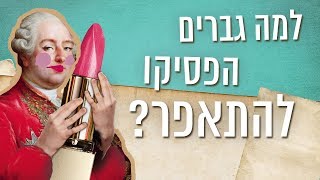
Kan Curious | When Did Men Stop Wearing Makeup?
Did you know that for most of human history, makeup was not considered the exclusive domain of women? In fact, for thousands of years, men used pigments, powders, and cosmetics to project power, social status, and even proximity to the gods. From Ancient Egypt, where black eyeliner (kohl) served as both a fashion statement and protection against sun glare and eye disease, to the lavish 18th-century royal courts of Europe—where white powder and red lipstick were symbols of uncompromising nobility—the well-groomed, made-up man was the standard, not the exception. So, what happened along the way? When did the "red line" emerge that separated the sexes regarding facial grooming? The great shift began in the late 18th century, a period historians call "The Great Masculine Renunciation." With the rise of the Enlightenment and the Industrial Revolution, new social perceptions began to take root. Men abandoned flamboyant clothing, lace, and makeup in favor of dark, practical suits, aiming to project an image of seriousness, efficiency, and rationality. Makeup, henceforth perceived as artificial and "deceptive," was gradually associated with femininity alone, while masculinity was redefined through restraint and naturalness. During the 19th and 20th centuries, the stigma against male makeup intensified, shaped by political shifts and rigid gender norms. However, in recent decades, we have been witnessing a true renaissance. From rock and pop giants like David Bowie and Prince to Gen Z YouTubers and influencers, gender boundaries are blurring once again. Today, the male grooming industry is worth billions of dollars, bringing a central question back to the stage: Are we returning to an era where self-care is simply a matter of self-expression, regardless of gender? In this "Kaan Curiosity" video, we embark on a journey through time, following the colors that have adorned men's faces throughout history. We will explore the psychological and social processes that caused us to change our minds about what is considered "masculine" and examine whether mascara and concealer are poised to reclaim the male vanity set. Join us for a fascinating look at aesthetics, power, and image.Cookies & Privacy 🍪
We use cookies to improve your experience
For more information, see our Privacy Policy