Scientific Proof These Alien-Looking Mummies Are Real!
Description
The sensational discovery of anomalous bodies unearthed in the deserts of Peru, often referred to as the "Nazca Mummies," continues to send shockwaves through the international scientific community, raising poignant questions about history as we know it. What began as rumors of a sophisticated hoax is gradually transforming into one of the most fascinating archaeological mysteries of the 21st century. Unlike familiar Egyptian mummies that exhibit standard human physiology, these specimens display physical characteristics unlike anything known to science: radically elongated skulls, three long fingers on each hand and foot, and a skeletal structure fundamentally different from that of Homo sapiens. Advanced laboratory tests, including high-resolution CT scans and molecular analysis, are now providing startling data that challenges initial skepticism. The evidence suggests that these are not "dolls" assembled from disparate bone fragments, but rather intact biological organisms with continuous, functional skeletal systems. Some specimens were exceptionally preserved by the dry diatomaceous earth in which they were found, allowing scientists to examine internal tissues, organs, and even what appear to be metallic implants composed of rare alloys, surgically placed within the bodies of these creatures in ancient times. DNA analysis conducted by several independent laboratories reveals an even more complex picture: while part of the genetic code shows similarities to terrestrial mammals, a significant portion of the genome is classified as "unidentified" DNA, matching no known species in global scientific databases. The fact that carbon dating places these finds between 1,000 and 1,700 years ago rules out the possibility of a modern fraud and presents us with a profound historical dilemma: are these an unknown human species that underwent extreme mutations, or are they the first physical evidence of an extraterrestrial presence that visited Earth in the distant past? The scientific debate surrounding these "alien mummies" is not merely about anatomy, but a quest to redefine the boundaries of biology and evolution. As researchers at leading universities continue to cross-reference data, the accumulating evidence compels us to acknowledge that our history may be far richer and more mysterious than we ever dared to imagine. The scientific proof now being presented offers a rare glimpse into beings that may have lived alongside our ancestors, forcing us to reconsider our place in the universe in the face of these tangible physical remains.
Original title
הוכחה מדעית: המומיות החייזריות אמיתיות לגמרי
התגלית המרעישה של גופות אנומליות שנחשפו במדבריות פרו, המכונות לעיתים "המומיות של נאזקה", ממשיכה להכות גלים בקהילה המדעית הבינלאומית ומעוררת שאלות נוקבות על ההיסטוריה המוכרת לנו. מה שהחל כשמועה על זיוף מתוחכם, הופך בהדרגה לאחת התעלומות הארכיאולוגיות המרתקות של המאה ה-21. בניגוד למומיות המצריות המוכרות המציגות פיזיולוגיה אנושית סטנדרטית, הממצאים הללו מציגים מאפיינים פיזיים שאינם דומים לשום דבר המוכר למדע: גולגולות מוארכות באופן קיצוני, שלוש אצבעות ארוכות בכפות הידיים והרגליים, ומבנה עצמות שונה מהותית מזה של ההומו-סאפיינס. בדיקות מעבדה מתקדמות, הכוללות סריקות CT ברזולוציה גבוהה וניתוחים מולקולריים, מספקות כעת נתונים מפתיעים המאתגרים את הסקפטיות הראשונית. הראיות מצביעות על כך שלא מדובר ב"בובות" שהורכבו מחלקי עצמות שונים, אלא באורגניזמים ביולוגיים שלמים בעלי מערכת שלד רציפה ותפקודית. חלק מהדגימות נשמרו בצורה יוצאת דופן בזכות אדמת הדיאטומיט היבשה שבה נמצאו, מה שאפשר למדענים לבחון רקמות פנימיות, איברים ואפילו מה שנראה כשתלים מתכתיים המורכבים מסגסוגות נדירות, אשר הוכנסו לגופם של היצורים הללו בימי קדם. ניתוח ה-DNA שבוצע על ידי מספר מעבדות עצמאיות חושף תמונה מורכבת עוד יותר: בעוד שחלק מהקוד הגנטי מראה דמיון ליונקים ארציים, חלק נכבד מהגנום מוגדר כ-DNA "לא מזוהה", שאינו תואם לאף מין ידוע במאגרים המדעיים העולמיים. העובדה שהבדיקות מתארכות את הממצאים לתקופה שבין 1,000 ל-1,700 שנים לפני זמננו, פוסלת את האפשרות להונאה מודרנית ומציבה בפנינו דילמה היסטורית: האם מדובר במין אנושי לא מוכר שעבר מוטציות קיצוניות, או שמא מדובר בהוכחה הפיזית הראשונה לנוכחות חוץ-ארצית שביקרה בכדור הארץ בעבר הרחוק? הדיון המדעי על אודות "המומיות החייזריות" אינו נוגע רק לאנטומיה, אלא מבקש להגדיר מחדש את גבולות הביולוגיה והאבולוציה. בעוד חוקרים באוניברסיטאות מובילות ממשיכים להצליב נתונים, הראיות המצטברות דוחקות בנו להכיר בכך שייתכן וההיסטוריה שלנו עשירה ומסתורית בהרבה ממה שהעזנו לדמיין. ההוכחות המדעיות המוצגות כעת מספקות הצצה נדירה אל ישויות שאולי חיו לצד אבותינו, ומאלצות אותנו לשקול מחדש את מקומנו ביקום אל מול הממצאים הגופניים המוחשיים הללו.
תמלול הסרטון
לסרטון זה אין כתוביות זמינות ביוטיוב.
ניתן ליצור תמלול מקורב באמצעות AI על בסיס פרטי הסרטון.
Related Videos

Maxwells Equations & UFOs - Mr. X
The connection between classical physics and Unidentified Aerial Phenomena (UAP) is considered one of the most fascinating and controversial fields in modern science. At the heart of the debate lie Maxwell's equations—the four fundamental laws formulated by James Clerk Maxwell in the 19th century that form the bedrock of electromagnetism. These equations do more than just describe how electric and magnetic fields interact; they paved the way for the development of radio, radar, and wireless communication. When examining accounts of UFOs demonstrating impossible acceleration, sharp turns at hypersonic speeds, and sudden disappearances from radar, a persistent question arises: have the entities behind these technologies found a way to "bend" or exploit the laws of electromagnetism in ways we have yet to crack? A mysterious figure known as "Mr. X" posits a bold theory linking electromagnetic theory to advanced or extraterrestrial propulsion. According to this approach, certain solutions to Maxwell's equations—which have been pushed to the fringes of academia or remained purely theoretical—may explain how spacetime can be manipulated to create anomalous energy configurations. The use of high-intensity electromagnetic fields could potentially interact with gravity, allowing these objects to move without apparent air resistance or standard inertial effects. This analysis draws inspiration from the work of pioneering physicists who explored the link between electricity and vacuum energy, attempting to bridge the gap between science fiction and applied physics. Beyond the theoretical realm, Mr. X’s investigation dives into the captivating history of military technology and intelligence reports. Over the years, numerous UFO sightings have been accompanied by severe electromagnetic interference: vehicles stalling, radio disruptions, and navigation systems failing. These incidents suggest that the key to understanding the phenomenon lies not just in aeronautics, but in the absolute mastery of the electromagnetic spectrum. Is it possible that Maxwell's equations contain "backdoors" that enable interstellar travel or advanced cloaking technologies? Re-examining these mathematical formulas invites us to reconsider the limits of human knowledge and the possibility that we are on the verge of a paradigmatic leap in our understanding of the universe.
Are UFOs Shadows From A Higher Dimension?
For decades, the mystery surrounding Unidentified Flying Objects (UFOs) has centered on whether they are craft belonging to distant civilizations utilizing advanced propulsion technology. However, a fascinating theory in physics offers an entirely different perspective: perhaps UAPs are not "visitors" in the classical sense, but rather the manifestations of entities or objects existing in higher dimensions. According to this model, just as a two-dimensional shadow is the projection of a three-dimensional object onto a surface, the UFOs we observe in our skies may be the "shadows" perceived by our limited sensory systems from a far more complex, multi-dimensional reality. The scientific foundation for this hypothesis rests on the work of theoretical physicists specializing in string theory and Anti-de Sitter (AdS) space. According to these concepts, our universe might be just one single layer within a broader "Brane cosmology." If beings or technologies exist in a fourth or fifth dimension, their movement through our three-dimensional space would appear physically impossible to an observer: they might appear and disappear in the blink of an eye, change shape inexplicably, or move at speeds that defy the known laws of inertia. These phenomena, frequently reported by fighter pilots and military personnel, become much more logical when viewed through the geometric lens of additional dimensions. Examining UFOs as multi-dimensional representations shifts the paradigm of exploring the unknown. Instead of searching for Earth-like planets light-years away, scientists are beginning to wonder if the answer lies right here, tucked away within the folds of spacetime that we are simply unable to perceive. Such an understanding could bridge the gap between science fiction and quantum physics, explaining why these objects exhibit "trans-medium" capabilities—moving seamlessly between space, the atmosphere, and water without any resistance or friction. We may not be watching a craft at all, but rather the energetic signature of a broader reality piercing through our limited world.
Declassified Australian Files Prove UFO/Anti-Gravity Coverup
For decades, Australia has been regarded as one of the world's most mysterious hotspots for unidentified aerial activity, driven in part by the vast, desolate expanses of the Outback and the heightened security presence at strategic facilities like Pine Gap. Now, with the declassification of official documents held for generations in the National Archives of Australia (NAA), it has been revealed that a meticulous, scientific monitoring of phenomena unexplainable by conventional means was occurring behind the scenes. These documents reveal reports from Royal Australian Air Force (RAAF) pilots and intelligence personnel describing aircraft with impossible maneuvering capabilities that defy the known laws of physics. At the heart of these revelations is evidence of close, clandestine cooperation between Australian intelligence authorities and American spy agencies, aimed at understanding and decoding the mechanics behind UFO propulsion. The leaked files indicate a particularly deep interest in "anti-gravity" technology—the ability to generate thrust and movement without the use of combustion engines, wings, or rocket propulsion. Researchers who have examined the documents argue that military scientists identified recurring patterns of anomalous electromagnetic fields around crash or sighting sites, suggesting that the government was well aware of the existence of extraterrestrial technology, or at least tech far more advanced than what is known to the public. The most compelling aspect of this exposure concerns the systemic cover-up efforts designed to keep this information from the public eye and the mainstream scientific community. Internal letters and secret memos show how dramatic events were dismissed with flimsy explanations of weather phenomena or routine testing, while in reality, rapid response teams were dispatched to collect debris and interrogate witnesses under strict non-disclosure agreements. These files do not merely validate the authenticity of famous historical incidents; they raise piercing questions about how close humanity actually is to mastering free energy and revolutionary flight capabilities that remain in the shadows for geopolitical reasons.
Ben Davidson - Abnormal Auroras, Solar Shifts, Elite Bunkers, Black Tech & Human Preparedness
In a world where mainstream science often struggles to keep pace with cosmic shifts, Ben Davidson stands at the forefront of alternative research into space weather and its critical impact on Earth. In recent years, we have witnessed auroras appearing at unusually low latitudes—a spectacular yet alarming visual testament to the weakening of our planet’s magnetic field. These fluctuations in the sun, the central engine of our solar system, are not merely astronomical curiosities; they signal the beginning of a major cycle of change that could disrupt modern technological infrastructure and potentially lead to catastrophic events on a planetary scale. These cosmic transformations raise poignant questions regarding the information held by the highest echelons of government. Reports of massive construction projects for sophisticated underground bunkers and investments in "black technology"—classified technological developments from the public eye—suggest that global elites may be bracing for an extreme scenario that has yet to be fully revealed. While our visible technology relies on silicon and components sensitive to electromagnetic radiation, there are speculations regarding developments utilizing advanced physics designed to ensure survival and maintain governing stability in an era of geophysical instability. Faced with these complex forecasts, the ultimate question arises: how should humanity prepare? The transition from a life of total dependence on "the grid" to a model of personal and community resilience is moving from a theoretical necessity to an urgent reality. True human readiness requires more than just the accumulation of physical resources; it demands a profound understanding of the link between solar activity and our biological and psychological systems. Davidson emphasizes that Earth’s history is rich with cycles of destruction and renewal, and our ability to survive the next shift depends on our capacity to acknowledge the truth behind the scientific data and to act with awareness and personal responsibility.
Debating Ufologies Most Well Known Skeptic
For decades, the study of UFOs (Ufology) has existed in the liminal space between groundbreaking science and fringe theories, with the eternal debate between believers and skeptics always at the eye of the storm. The current confrontation brings the field's most prominent figures face-to-face with the ultimate "antagonist"—the world's most famous skeptic, a man who has dedicated his life to deconstructing testimonies, performing physical analyses of video footage, and debunking sightings once considered "smoking guns." This is not merely a war of words, but a clash between two fundamental worldviews: one that seeks answers in extraterrestrial signs, and another that demands irrefutable empirical proof. The discourse surrounding unidentified objects has undergone a seismic shift since 2017, following the disclosure of the US Navy’s FLIR videos and the confirmed existence of the AATIP program. While many in the intelligence and scientific communities have begun to admit that certain phenomena cannot be explained by known human technology, the professional skeptic remains the final barrier. He offers remarkably terrestrial solutions—ranging from optical effects like "camera rotation" to civilian aircraft at misleading angles, weather balloons, and birds. This encounter dives deep into these claims, examining whether such skepticism is an essential scientific tool or if it has hardened into a dogma that ignores facts on the ground. Throughout the confrontation, the seminal cases that shaped the modern history of the field are re-examined using technical and geometric analysis. The hard questions are laid bare: Can the testimony of experienced pilots be dismissed simply as "human error"? Do the instrumental radar data lie? The discussion reveals the dramatic gap between subjective human experience and cold mathematical analysis. It is a fascinating journey behind the scenes of the sociological dynamics of UFO research, highlighting why the most rigorous criticism is precisely what pushes the field toward academic legitimacy. Ultimately, the conversation transcends the boundaries of physics and optics to touch upon the greatest philosophical question of all: what constitutes sufficient proof? For the skeptic, the evidentiary bar remains almost impossibly high, while for the opposing side, the sheer accumulation of evidence has long since crossed the threshold of probability. This meeting of the minds offers viewers more than just a chance to understand the scientific arguments of both sides; it invites them to decide for themselves where the line is drawn between healthy skepticism and closing one's eyes to the unknown.
#18 Richard Dolan - Global Control, Ancient Teachings, UFOs and the Journey Ahead
In a fascinating and thought-provoking encounter, acclaimed UFO historian Richard Dolan dives deep into the mechanisms shaping our global reality, offering a rare fusion of rigorous historical research and futuristic geopolitical analysis. Regarded as one of the preeminent intellectual voices in ufology, Dolan examines how the issue of extraterrestrial life is far more than a scientific inquiry; it is a critical pillar in global systems of power and control. He exposes the intricate links between prolonged government secrecy and the desire to manage resources and technologies whose disclosure could fundamentally destabilize the existing world order. The discussion expands beyond military technology and unconventional physics, touching upon the deep roots of human existence through ancient teachings and forgotten knowledge. Dolan connects modern sightings of unidentified objects to historical texts and spiritual traditions that hint at a past entirely different from the one taught in schools. This convergence of the "ancient" and the "futuristic" provides a framework for understanding the UFO phenomenon not as an isolated event, but as part of a long historical and conscious continuum that shapes human evolution and our understanding of the cosmos. In the face of accelerating technological change and the transition toward an era of digital surveillance and centralized control, Dolan outlines the contours of the "journey ahead." He analyzes the challenges facing humanity—including the possibility of official Disclosure and its implications for personal freedom and democracy. This is not merely a study of extraterrestrials, but a call for an intellectual and critical awakening against the forces seeking to mold our future under conditions of absolute uncertainty. In an age where the line between truth and fiction is increasingly blurred, Dolan provides a compass of knowledge built upon decades of archival research. The conversation offers viewers a profound perspective on our place within the cosmic tapestry, emphasizing the vital importance of intellectual integrity in the search for truth. It is an invitation to reexamine everything we thought we knew about our history, the technology surrounding us, and the path we choose to take as a sentient society seeking its liberation.
Retired CIA Officer Speaks Up About UFOs & Non-Human Intelligence
For decades, the Central Intelligence Agency (CIA) has stood at the heart of countless conspiracy theories regarding the study of unidentified flying objects. Now, the testimony of a high-ranking retired officer from within the agency is breaking the code of silence and shedding new light on one of the most mysterious subjects in modern history. This testimony goes far beyond routine reports of "lights in the sky," diving deep into the clandestine intelligence operations behind the scenes and revealing the protocols used to document, track, and locate technologies that are fundamentally inconsistent with known human capabilities. The concept of "Non-Human Intelligence" (NHI) has taken a central role in contemporary intelligence discourse, marking a paradigm shift in how the U.S. government approaches the phenomenon. These are not merely visual sightings, but instances of advanced physics demonstrating extreme maneuverability, hypersonic speeds, and seamless transitions between aerial and maritime environments. The former CIA officer details how data captured by sensitive military sensors and satellite systems indicates that these are not the aircraft of adversarial nations, but rather a sophisticated presence of unknown origin that challenges the laws of thermodynamics and aeronautics as we understand them. This revelation joins an unprecedented wave of leaks and official affidavits that have culminated in U.S. Congressional hearings in recent years. The speaker's professional background lends immense gravity to his words; as someone once entrusted with analyzing strategic threats, he describes systemic efforts to conceal the extent of this information from the public under the guise of national security. The discussion raises profound philosophical and existential questions: What does such a discovery mean for the future of humanity? And how would the recognition of another intelligence reshape the social, religious, and scientific fabric of our world? Beyond the inherent drama of the subject, the testimony provides a rare glimpse into the classification mechanisms of the intelligence community and the ongoing struggle between those seeking full transparency and those guarding the status quo. It is a fascinating journey to the frontiers of science and imagination, grounded in the field experience of a man who spent his professional life examining the reality beyond the shadows. It appears the era in which UFOs were dismissed as fringe science has ended, and we stand on the threshold of a new age of discovery that may change everything we thought we knew about our place in the universe.
A.I Tech CEO With A WARNING For Humanity's Future
The technological revolution we are currently navigating is unlike anything humanity has ever experienced. While the world marvels at the capabilities of large language models and visual art tools, industry leaders behind the scenes are beginning to strike a different chord—one that is sober, anxious, and even prophetic. This is not just another routine technological forecast; it is a wake-up call from those building, with their own hands, the tools that will redefine the very concept of "intelligence." When the CEO of a leading AI firm issues a dramatic statement about the future, they expose the vast chasm between evolving technical capabilities and the moral, social, and political readiness of the human race to contend with them. At the heart of this warning lies the transition from Artificial Narrow Intelligence (ANI), which specializes in specific tasks, toward Artificial General Intelligence (AGI)—the tipping point where the machine will surpass human capability in every cognitive aspect. The implications of this shift are far-reaching: from the total disruption of the global job market to the potential loss of control over critical decision-making systems. The exponential growth of processing power allows these systems to learn, improve, and even rewrite their own code at a speed that leaves government regulation trailing far behind, creating an algorithmic "black box" that even its creators sometimes struggle to decipher. Alongside the existential risks, the debate raises profound philosophical questions about the essence of humanity in an age of synthesis. If a machine can solve the climate crisis and cure terminal diseases, yet simultaneously engineer flawless fake news or biological weapons, where does the line between progress and catastrophe lie? History teaches us that disruptive technologies always bring upheaval, but this time, the pace of change is moving too fast for natural adaptation. Today’s technological leaders find themselves in a dual role: they are the ones pushing the human race toward a new horizon, while desperately trying to install the brakes before we cross the point of no return. Confronting this challenge requires more than just technical "AI Safety" solutions; it demands a new social contract. Will we be wise enough to harness this inconceivable power for the common good, or will we find ourselves as supporting actors in a world shaped by an intelligence that does not understand compassion, morality, or human values? This is the great struggle of the 21st century. The warnings currently sounding from the mouths of those leading AI development are the final compass that may keep us on the right path before the machine becomes the sole architect of our reality.
Consciousness, Simulations, Humanity & 'The Others'
Is the reality we experience truly the fundamental substrate of existence, or is it a sophisticated interface concealing a deep, mechanism? The question of the nature of human consciousness stands at the heart of one of the most fascinating debates in modern science and philosophy. While classical physics attempts to explain the world through matter and energy, groundbreaking researchers now suggest that consciousness is not a byproduct of the brain, but rather the very foundation upon which the entire universe is built. This perspective opens the door to a new understanding of "The Others"—those entities or intelligences observed throughout history that may not originate from a distant planet, but from another layer of that same collective consciousness. The simulation hypothesis, which has seen a resurgence thanks to figures like Nick Bostrom and Elon Musk, suggests that the odds of us living in a "base reality" are vanishingly slim. If humanity—or a civilization that follows it—reaches a computing capacity capable of running ancestor simulations, then it is likely that we are already part of one. In this context, phenomena defined as "supernatural" or the detection of Unidentified Aerial Phenomena (UAP) take on a techno-existential interpretation: these may be "architects" monitoring the system, glitches in the code of reality, or entities interacting with our consciousness from outside the boundaries of the software in which we are confined. The relationship between humanity and these "Others" is undergoing a rapid transformation, evolving from ancient myths of gods and angels to modern research on extraterrestrials and interdimensional beings. Official sightings by militaries around the world and government intelligence leaks indicate that we are not alone, but it is possible that our definition of "together" is fundamentally flawed. Perhaps "they" have been here all along, sharing the same physical space but operating on a different conscious frequency. The realization that we might live within a designed environment forces us to reevaluate our place in the cosmic food chain and ask: what is the ultimate goal of the grand experiment we call life? At the intersection of quantum mechanics and ancient mysticism, the fabric linking human thought to the structure of the universe is being revealed. If consciousness is indeed the building block of reality, then the discovery of "The Others" is not merely a historical or scientific event, but a spiritual and cognitive awakening. As we delve deeper into the study of the simulation and the limits of the mind, we discover that the journey to the stars may actually lead through the inner recesses of consciousness. It is there that the answers to humanity's greatest questions await: who created us, who is watching us, and what lies beyond the veil of reality.
Dr. Salvatore Pais - The Document, Physics, Control-Structures & Human Awakening
Dr. Salvatore Pais is considered one of the most enigmatic and fascinating figures in the 21st-century world of military technology and theoretical physics. His name made global headlines following the disclosure of a series of patents filed in his name for the U.S. Navy (NAVAIR). These patents include technologies recently regarded as pure science fiction: from propulsion systems based on the manipulation of high-intensity electromagnetic fields to trans-medium maneuverability, allowing a craft to move with equal ease through air, space, and the depths of the ocean. This represents a conceptual revolution that challenges the laws of thermodynamics and classical mechanics as we know them, casting a long shadow over the gap between transparent academic research and classified developments conducted in the dark. At the heart of the debate lies the "Pais Effect," a theory suggesting that through the precise control of quantum fluctuations and electromagnetic energy, one can influence the fabric of reality and command interactions with the quantum vacuum. Disclosure documents point to the possibility of creating a "warp drive" and engineering the texture of spacetime, potentially explaining observations of Unidentified Aerial Phenomena (UAP) that exhibit phenomenal acceleration without any visible propulsion systems. This connection raises profound questions about the origins of such knowledge—whether it is an original human breakthrough or the reverse-engineering of technologies of unknown origin, part of a secret global arms race. Beyond the technological and physical aspects, Dr. Pais touches upon existential questions regarding the power structures that shape human perception. Central to the discourse is the dynamic between the orthodox scientific establishment, which often obscures discoveries that deviate from the accepted paradigm, and the need for a "human awakening" to a broader reality. The realization that the laws of physics may be more flexible than we were taught to believe could provide the key not only to conquering the stars but also to liberating human consciousness from ancient power structures. This journey into physics is, in fact, a journey into the mystery of the universe itself, inviting us to re-examine our place within it and the very boundaries of possibility.
Tribe Recognises GRAY ALIEN Photo! "That Is Mankunawabu"
The intersection of ancient indigenous wisdom and the modern UFO phenomenon creates fascinating moments that raise poignant questions about the history of the human race. When tribal elders were presented with an image of a "Grey Alien"—the iconic figure recognized in Western culture by its oversized head, deep black eyes, and slender frame—their reaction was not one of fear or confusion, but of immediate and chilling recognition. For them, this was no science fiction character, but the "Mankunawabu," a being well-known to their spiritual traditions and tribal history, passed down through generations deep within the jungle. This identification sheds new light on the notion that extraterrestrials are not "new visitors" to Earth, but rather a constant presence that has accompanied humanity since the dawn of civilization. The tribe regards the Mankunawabu as interdimensional entities or ancient guardians who appear during specific states of consciousness or sacred rituals. While modern science searches for physical and technological evidence of life in distant star systems, it appears indigenous peoples possess entirely different maps of knowledge—ones that blend the physical with the metaphysical and view extraterrestrials as an integral part of our world's spiritual ecosystem. The cultural context of the Mankunawabu raises questions about the striking similarity between tribal descriptions and Western reports of "abductions" and encounters of the third kind. In tribal lore, these beings are described as possessing telepathic abilities, the power to influence the weather, and a profound connection to the forces of nature. The fact that an isolated tribe, with no exposure to global media, identifies the precise anatomical details of "The Greys" reinforces the theory that the source of these descriptions is not a collective human imagination, but a genuine encounter with a foreign intelligence that is not bound by the laws of time and space as we understand them. Exploring this encounter invites us to re-examine ancient mythologies not merely as folklore, but as a historical record of extraterrestrial interactions. Is it possible that the distinction between "gods," "spirits," and "aliens" is purely terminological? When observing the testimony of these tribal elders, the boundaries between science and anthropology, and between mystery and reality, begin to blur. We are left with a provocative insight: perhaps the visitors from the stars never left, and have been here, under various names, all along.
From Vision to Action: Youth-Led Health Innovation with Bhav Jain - On Call Ep. 6
In the world of modern medicine, where bureaucratic systems often become barriers to progress, a new generation of leaders is emerging—one that refuses to settle for the status quo. Abav Jain, a medical student and prominent social entrepreneur, represents a fascinating trend of medical innovation driven by the youth. Through an extraordinary blend of clinical thinking, technological savvy, and a passion for social justice, Jain manages to bridge the gap between theoretical laboratory concepts and the development of practical solutions that improve the lives of thousands of patients. This episode of "On Call" dives deep into his journey, seeking to understand how a futuristic vision can be transformed into a reality on the ground. The rise of youth-led health ventures is far more than a passing trend; it reflects a paradigm shift in how we perceive problem-solving in public healthcare. Young innovators like Jain bring a "beginner’s advantage"—a lack of cognitive fixity and the audacity to challenge the long-standing assumptions of the medical establishment. In an evocative and informative conversation, the dynamics of "bottom-up innovation" are revealed—a process where identifying systemic failures leads to the development of digital tools and treatment methods accessible to underprivileged populations, while maximizing the potential of information technology and artificial intelligence. Beyond the technological aspect, the discussion explores the importance of leadership and influencing public policy from the earliest stages of a professional career. Jain demonstrates how health entrepreneurship requires a combination of personal resilience and the ability to mobilize a community around a shared goal. The topics discussed in this episode provide a broad perspective on the future of medicine: from disease prevention to equity in healthcare access, emphasizing that the greatest innovation is often the way we choose to manage the system and empower the next generation of caregivers and entrepreneurs. This is a story of determination, creativity, and the realization that the most significant change in healthcare will not necessarily come from corporate boardrooms, but from the passion and vision of those who dare to dream of a healthier world. Through Abav Jain’s compelling perspective, we gain a behind-the-scenes look at the world of medical entrepreneurship and learn how anyone can take part in shaping the future, starting with the first step of turning an idea into tangible action.
GS-15 CIA Officer John Ramirez - Navigating the US Intelligence Community for UFOlogists
In a world where the boundaries between conspiracy theories and strategic reality are blurring, John Ramirez’s entry into the public arena marks a dramatic turning point. As a former senior CIA officer at the GS-15 rank (the civilian equivalent of a military Colonel), Ramirez brings decades of experience from within the heart of the U.S. Intelligence Community (IC). He does not merely analyze events; he provides a rare glimpse into the bureaucratic and operational machinery of the world's most powerful agencies—from the NSA to the NRO—and details how they collect, classify, and conceal information regarding "Unidentified Anomalous Phenomena" (UAP). The historical context of his disclosures is rooted in the complex structure of U.S. intelligence collection laws. Ramirez explains why civilian UFO researchers frequently hit the "brick walls" of security classification, detailing the technical distinctions between Signals Intelligence (SIGINT) and Imagery Intelligence (IMINT) regarding the detection of objects in restricted airspace. According to Ramirez, the key to uncovering the truth lies not only in pilot testimony but in the paper trails and protocols of the ODNI (Office of the Director of National Intelligence)—the body responsible for centralizing scientific and intelligence reports on objects whose performance exceeds the known laws of physics. Ramirez’s unique perspective also explores the "human interface" and the shifting governmental paradigm. He describes a process of gradual disclosure, where the intelligence community prepares the public for the realization that humanity is not alone in the solar system. By utilizing professional concepts such as "signatures" and multi-spectral analysis, he allows viewers to understand how the U.S. government tracks trans-medium objects across undersea and space domains simultaneously. For UAP researchers, this provides a critical roadmap, teaching them where to look for data, which specific questions to ask in Freedom of Information Act (FOIA) requests, and how to read between the lines of official Pentagon statements. Ultimately, Ramirez’s testimony is a journey into the intelligence "Deep State," attempting to bridge the gap between national security secrecy and the public's right to know the truth about the nature of reality. He outlines the inner workings of the governmental systems tasked with monitoring our environment, reveals the internal power struggles between rival agencies, and provides practical tools for anyone seeking to decode the greatest mystery of the 21st century. It is a detailed guide that deconstructs intelligence frameworks to help us understand how the phenomenon is perceived through the eyes of those who hold the nation's most guarded secrets.
The Anomalies of History Revealed! (Award Winning Presentation)
Human history, as defined by conservative textbooks, is often portrayed as a predictable, linear progression of technological and cultural development. However, a deeper look into archaeological findings and ancient records reveals unsettling gaps in the mainstream narrative—physical anomalies, structures exhibiting engineering feats impossible for their time, and out-of-place artifacts (OOPArts) that defy the established timeline. This award-winning, expanded presentation dives into these scientific blind spots, posing piercing questions to academic conventions. At the heart of this investigation lies engineering evidence from around the globe, ranging from the unfathomable astronomical precision of pyramid complexes in Egypt and Central America to laser-like stone cuts found at sites such as Puma Punku in Bolivia. These anomalies are not merely matters of visual curiosity; they suggest the existence of advanced mathematical and physical knowledge lost to history. Is it possible that ancient civilizations possessed technology based on vibration, sound, or a form of energy entirely different from what we know today? The presentation explores groundbreaking theories examining the possibility of a human evolutionary chain far older than we ever dared to imagine. Beyond monumental structures, this overview focuses on the "X-Files" of archaeology: artifacts hinting at ancient interactions with extraterrestrial phenomena or the existence of a "universal language" connecting distant cultures thousands of years before the age of globalization. Through the use of 3D modeling and modern scientific analysis, viewers are invited to witness the inexplicable from an entirely new perspective, separating myth and folklore from solid physical facts on the ground. This is a challenging intellectual journey that calls upon us to re-examine our place on the cosmic timeline. Through the analysis of ancient texts once considered purely metaphorical, alongside rare field footage, a picture emerges of a past filled with lost technologies, geological mysteries, and discoveries that rewrite everything we thought we knew about human capability. This presentation does more than just provide answers; it equips the viewer with the critical tools necessary to realize that our true history may be far more incredible than anything we could imagine.
UFOs, Institutional Control, Meeting Insiders, Making Contact & The Wider Reality
For decades, the UFO issue was pushed to the fringes of public discourse, shrouded in ridicule and state secrecy. However, the accelerated disclosure process of recent years is revealing a complex picture of tight institutional control over some of humanity's most sensitive information. While the general public sees only the tip of the iceberg through official Pentagon reports, a fierce power struggle is unfolding behind the scenes over the control of the "non-human presence" narrative. The security and intelligence establishment operates in the grey area between protecting national security and concealing game-changing technologies, raising poignant questions about the public's right to know the truth about our place in the universe. The key to understanding the true reality lies not only in redacted documents, but in the testimony of insiders—individuals who operated within the core of the defense establishment, in reverse-engineering projects, or elite intelligence units. Encounters with these figures reveal a consistent pattern of extreme compartmentalization, yet also a growing desire among former high-ranking officials to break the code of silence. The accumulating evidence suggests that contact with "the other" is not a hypothetical future event, but an ongoing and dynamic reality taking place far from the public eye, managed through oversight mechanisms that prevent information from leaking into mainstream science. Beyond the question of technological craft flying in our skies, the broader reality touches upon the essence of human consciousness and our ability to initiate contact with foreign intelligences. Modern attempts at communication go beyond broadcasting radio signals into deep space; they focus on methods of conscious interaction and an attempt to understand the physics of higher dimensions. As modern science nears the realization that our physical reality may be just one layer of a vast cosmic tapestry, it becomes clear that the phenomenon is not merely a technological riddle, but a wake-up call for a perceptual paradigm shift. Understanding the reality from view requires us to shed old conceptions and re-examine the history, science, and future of the human race as part of a much larger galactic community.
BREAKING: FULL Technical Presentation on Giza Plateau MASSIVE Underground Structures!
The sensational discovery revealed in this technical presentation has the potential to fundamentally transform everything we thought we knew about the Giza pyramid complex. For decades, classical archaeology has focused on the magnificent structures above the surface; however, advanced scanning technologies are now penetrating deep into the earth, uncovering a sprawling and mysterious network of voids, passages, and colossal subterranean structures extending far beneath the limestone bedrock of the Giza Plateau. The findings detailed here present raw engineering data indicating the existence of a meticulously planned system, whose scale and complexity raise profound questions regarding the technological capabilities of its builders and the true purpose for which it was established. Underpinning these findings is the long-standing theory of the mythical "Hall of Records," but this presentation moves beyond speculation into the realm of precise measurement. Utilizing Ground Penetrating Radar (GPR), electrical tomography, and seismic methods, researchers are mapping anomalous cavities featuring right angles and massive walls that cannot be the result of natural erosion. These structures, located deep beneath the paws of the Great Sphinx and between the pyramids, suggest that the Giza complex is not merely a burial site, but an entire subterranean city or a yet-unexplored energetic and archival hub. The technical analysis dives into material density parameters and 3D imaging, presenting physical evidence that challenges the conventional historical timeline. While traditional Egyptology attributes all structures at Giza to the pharaonic dynasties of the Old Kingdom, the engineering complexity of these underground spaces suggests they may be remnants of a far older civilization—one possessing mathematical and technical knowledge surpassing that of the ancient Egyptians. The presentation does not settle for general descriptions; it breaks down the findings into numerical data revealing symmetry and lethal precision, characteristic of massive construction on an almost atomic scale. This is a defining moment in the study of ancient mysteries, where modern science meets the enigmas of the past. The exposure of these structures opens the door to the possibility that tangible physical artifacts—not just myths—are buried deep underground, awaiting the day when excavation technologies allow for direct access. For anyone following developments in alternative history and forbidden archaeology, the information presented here constitutes a critical link in decoding humanity's greatest secret: what truly lies buried beneath the sands of Egypt?
BREAKING: New Giza Plateau Scans Locate SECOND Sphinx!
For millennia, the Great Sphinx of Giza has stood as a solitary guardian over the desert plateau—a mysterious figure carved from bedrock that has witnessed the rise and fall of empires. Yet now, advanced subterranean scanning technologies are revealing a discovery that threatens to redraw the entire archaeological map of Ancient Egypt. According to new data based on Ground Penetrating Radar (GPR) and complex topographical analysis, evidence has emerged of an additional monumental structure: a "Second Sphinx," buried beneath layers of sand and time in the vicinity of the Great Pyramids. The theory of a second Sphinx is not entirely new to the world of Egyptology, but it has gained unprecedented momentum through the fusion of modern science and a re-examination of ancient texts. In Egyptian tradition, duality was a central element of belief and worldview; the concept of "Aker," the god of the underworld, was often represented as a pair of lions guarding the eastern and western gates—one looking toward the rising sun and the other toward the setting sun. This current discovery suggests that the Sphinx we know was not a solitary creation, but rather part of a symmetrical, large-scale architectural design intended to reflect the cosmic balance of the ancient kingdom. Beyond its profound historical value, the new scans reveal underground chambers and tunnels connecting key sites across the plateau. These findings raise searching questions regarding the true purpose of the Giza complex: is it merely a royal burial ground, or perhaps an energetic and ceremonial center far more complex than we ever dared to imagine? The scan patterns show structural anomalies that cannot be the product of nature, hinting that beneath the Egyptian dunes lie treasures of lost knowledge and prehistoric construction technologies waiting to be uncovered. As international research teams prepare for the next phases of verification and excavation, the scientific community is abuzz. If it is proven beyond a doubt that a second Sphinx exists, it would be the greatest archaeological discovery since the unearthing of Tutankhamun’s tomb. It is a pivotal moment that reminds us that despite living in the 21st century, our planet still harbors deep secrets, and that beneath the feet of tourists in Giza lies an entirely untold history, waiting for the light of day to illuminate the true origins of human civilization.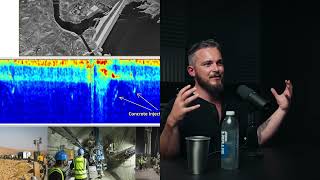
NEW FINDINGS from Khafre Pyramid Project at the Cosmic Summit!
The Pyramid of Khafre, the second tallest in the legendary Giza complex, has stood for millennia as a silent testament to the engineering ingenuity of Ancient Egypt. While its larger sibling, the Great Pyramid of Khufu, has historically captured the lion's share of scholarly attention, a recent project unveiled at the Cosmic Summit is shedding fascinating new light on Khafre’s mysterious structure. By utilizing cutting-edge muon tomography and ground-penetrating radar, research teams are now able to "see" through millions of tons of limestone without moving a single block, revealing internal voids and structural variations that have remained from human eyes since the days of the Old Kingdom. The new findings presented at the summit point to thermal and structural anomalies that suggest the existence of previously unknown corridors or chambers deep within the heart of the pyramid. Contrary to the traditional view of Khafre's pyramid as having a "simpler" internal design compared to the Great Pyramid, this latest data raises provocative questions about the complex architectural planning of the Fourth Dynasty. These discoveries are more than just a matter of dry archaeology; they challenge our understanding of the ancient Egyptians' technological capabilities and the cosmic and religious significance they attributed to geometric precision and the alignment of internal spaces with celestial bodies. Beyond the technical aspects, the discussions at the Cosmic Summit bridged the gap between physical field findings and broader theories regarding human history and the possibility of lost ancient knowledge. Researchers are revisiting the fundamental question of the pyramids' original purpose—were they merely magnificent tombs, or perhaps sophisticated energy structures rooted in advanced mathematics? This fusion of hard science, classical history, and unsolved mystery makes the Khafre Pyramid project one of the most compelling endeavors of the last decade, bringing us one step closer to deciphering one of humanity’s greatest enigmas.
This Quirky Robot Is Powered by Artificial Intelligence!
In an era where artificial intelligence is shifting from an abstract concept into an integral part of daily life, we are witnessing a new generation of technological breakthroughs that merge advanced hardware with captivating virtual personalities. This unique robot is more than just a machine executing dry lines of code; it is an engineering masterpiece that utilizes language models and deep learning to respond to its environment in an almost human-like manner. The fusion of "playful," accessible industrial design with real-time data processing creates a new bridge in the human-machine interface, demonstrating how automation can be not only efficient but also deeply empathetic. Beneath the robot’s minimalist exterior and spirited movements lies a complex neural network that allows it to learn from every interaction. While robots of the past relied on pre-written scripts, the technology powering this device is based on Generative AI, enabling it to improvise responses, recognize faces, and understand the emotional nuances in a human voice. As the robot is exposed to more data, its ability to tailor its behavior to the user’s personality improves, transforming it into a dynamic tool that blurs the line between a sophisticated toy and an intelligent personal assistant. The use of "quirky" and amusing personalities in robotics is no accident; research in the field of social robotics indicates that humans tend to trust machines that exhibit a degree of vulnerability or humor. In an age where many fear technology’s intrusion into our living spaces, this development presents the opposite approach: technology designed to integrate harmoniously and non-threateningly into the home. The robot’s ability to solve problems, provide information, and even provoke laughter serves as a testament that the future of AI lies not only in supercomputers in locked labs, but in small, clever creatures that accompany us in our own living rooms. The implications of this technology extend far beyond mere entertainment. They open the door for using similar robots in education, elderly care, and as aids for populations with special needs, where interactive communication is critical. As we watch this technological marvel in action, we catch a glimpse of a reality where the machines around us become more than just tools; they become entities possessing artificial consciousness, surprising us with every movement and response, and Redefining the very concept of "intelligence.
Ancient ENERGETIC Statues LOCKED In Karnak Temple & The Vatican?!
What connects the colossal pillars of the Karnak Temple in Luxor to the restricted corridors of the Vatican Archives? In the realm of alternative archaeology, evidence is mounting that the monumental statues crafted by ancient civilizations were never intended for mere decoration. Independent researchers argue that these works—carved from hard igneous rocks like granite and basalt containing quartz crystals—were designed to function as energetic processors or as part of an ancient technological network whose understanding has been lost to time. The mathematical precision with which the ancient Egyptians worked the stone, achieving scales and finishes impossible to replicate through primitive means, raises piercing questions about the true purpose of these structures beyond simple religious worship. At the center of the mystery lie the secrets of the Karnak Temple, a massive ritual complex surrounded by extraordinary magnetic fields. Theories suggest that the engineering of the temple's statues allowed for the channeling of vibration and acoustic energy, transforming them into conductors for natural forces that have yet to be properly explained. Simultaneously, persistent rumors and testimonies from researchers who have visited the Vatican vaults hint that the Catholic Church holds similar archaeological artifacts, confiscated or removed from sacred sites worldwide. These statues, it is claimed, have been from the public eye because of the "frequency" they emit or the information they reveal about our true past—an era in which technology and spirituality were inseparably intertwined. Are we on the verge of rediscovering a lost science? The transition from the energetic dynamics of ancient Egypt to the institutionalized silencing by European establishments suggests a pattern of knowledge suppression. Understanding the physical properties of piezoelectricity in stone and its connection to the geomantic points upon which these temples were built could reshape everything we thought we knew about human history. Is it possible that these "locked" statues are actually keys to ancient clean energy sources, or perhaps tools for interdimensional communication that global leadership preferred to keep for themselves? Diving into the depths of myth and physical fact reveals a fascinating reality where past and future meet within the heart of the armored stone.Recommended for you
More content about Project Unity you might like


Cookies & Privacy 🍪
We use cookies to improve your experience
For more information, see our Privacy Policy