The Office Scenes I Quote/Use Daily
Description
This video compiles memorable scenes from the hit TV show "The Office" that resonate with everyday situations. Viewers can expect a collection of humorous and relatable moments that the creator finds themselves quoting or referencing frequently. It’s a nostalgic look back at iconic snippets that have become part of popular culture and personal expression.
Original title
""The Office"" - סצנות שאני מצטט/משתמש בהן ביום-יום
הסרטון הזה מרכז סצנות בלתי נשכחות מהסדרה המצליחה "המשרד", הרלוונטיות למצבים יומיומיים. הצופים ייהנו מאוסף של רגעים הומוריסטיים ומזוהים, שהיוצר מוצא את עצמו מצטט או מתייחס אליהם לעיתים קרובות. זוהי הצצה נוסטלגית לקטעים אייקוניים שהפכו לחלק מהתרבות הפופולרית ומהביטוי האישי של רבים.
Video transcript
This video has no captions on YouTube.
You can generate an approximate AI transcript from the video metadata.
Related Videos
"Everybody Dance Now!" The Office - 5x27 Cafe Disco - Group Reaction
The episode "Cafe Disco" (5x27) stands as one of the most optimistic turning points in the fifth season of the American version of *The Office*, showcasing Michael Scott’s unique ability to transform personal disappointment into a communal celebration. Following the closure of the "Michael Scott Paper Company," Michael is left with a vacant office space on the ground floor of the Scranton Business Park. When he attempts to convert the room into a hybrid coffee shop and dance club, he initially faces cynicism and resistance from his employees, who are trying to maintain a professional routine. However, as the music gets louder, the rigid boundaries of the corporate environment begin to crumble, turning the episode into a display of pure emotional release for the characters. From a production and screenwriting perspective, the episode examines group dynamics through the almost ritualistic element of dance. One of the most memorable moments is the contrast between Phyllis’s attempt to loosen up her locked back and the explosive energy of Kelly and Erin. The mockumentary filming style gives the viewer a "fly on the wall" perspective of a party spiraling out of control; the handheld camera work and rapid cuts highlight the infectious euphoria spreading through the staff—led by Michael, who views dancing as the ultimate way to unite his office "family." The critical reaction to this episode focuses not only on the situational humor but also on the emotional depth simmering beneath the surface. This is the episode where Pam and Jim arrive at a pivotal decision regarding their wedding while watching their coworkers lose their inhibitions. An analysis of the scenes reveals how the music serves as a tool to heal the tensions built up throughout the season, and why the moment the entire group dances together to "Everybody Dance Now" has become iconic in modern sitcom history. This shared viewing experience allows us to deconstruct the mechanics of workplace comedy and understand why, years after its original airing, the episode still resonates with viewers longing for a moment of freedom within the gray monotony of the daily grind.The Best Pranks on Michael - The Office
The world of the modern office, as mirrored in the cult series *The Office*, became a comedic arena where the lines between managerial hierarchy and social chaos are completely blurred. At the heart of this whirlwind stands Michael Scott, the idiosyncratic and naive manager of Dunder Mifflin’s Scranton branch. Michael’s unique personality—a blend of a desperate need for social validation and a severe lack of self-awareness—made him the perfect target for his employees, led by Jim Halpert, who transformed the prank into a true work of art. The series did more than just make millions laugh; it explored the human dynamics where humor becomes a coping mechanism for the grinding routine of the workday. The pranks directed at Michael Scott are far more than simple practical jokes; they represent meticulous planning rooted in the complex psychology of the victim. Whether convincing him he’s been recruited for a top-secret CIA mission, misleading him about the time of day, or exploiting his intense desire to be "one of the guys," these pranks reveal his vulnerability and relentless optimism. Behind-the-scenes facts reveal that many of Steve Carell’s reactions included elements of improvisation, lending every situation the sense of documentary authenticity that defines the show's "mockumentary" style. Beyond the laughter, the pranks played on Michael Scott highlight the cultural legacy of *The Office* as a series that redefined 21st-century television. The ability to transform awkward situations and cringeworthy moments into a lesson on friendship, patience, and humanity is what rendered the show legendary. The evolution of these pranks throughout the seasons demonstrates how they shifted from simple amusement into a unifying mechanism for the office staff—either against or in support of the boss they eventually learned to love despite his flaws. This is a journey through the most iconic moments that shaped the world’s most famous boss, and a story of how humor manages to bridge both professional and personal divides.What are Bob and Phyllis Doing?! - The Office - 5x18 Blood Drive - Group Reaction
In the 18th episode of the fifth season of the iconic comedy series *The Office*, fans were treated to one of the most cringeworthy and memorable moments in the show's history. Titled "Blood Drive," the plot centers on Valentine's Day at the Scranton branch, where Michael Scott organizes an in-office blood drive following his breakup with Holly. While the episode follows Michael's desperate search for a new romantic connection, a subplot steals the show: the double date lunch featuring Bob and Phyllis Vance alongside Jim and Pam. What begins as an attempt at social bonding quickly devolves into an unbearable situation that puts the concepts of etiquette and privacy to the ultimate test. The dynamics between the Vance and Halpert-Beasley couples reach a peak of discomfort when Bob and Phyllis disappear for an extended period into the restaurant's restroom, leaving Jim and Pam stunned across from their plates of food. This moment highlights one of the most prominent traits of Phyllis’s character—the contrast between her sweet, grandmotherly facade and the bold, often uninhibited side that comes to life around her husband, "Bob Vance, Vance Refrigeration." Jim and Pam’s reaction, characterized by their famous looks toward the camera, serves as a comic anchor that amplifies the sense of "cringe" that has become the series' hallmark. On a production and writing level, the episode is considered a masterpiece in supporting character development. While Michael Scott represents loneliness and the longing for love, Bob and Phyllis represent the opposite extreme—a passion that knows no bounds and completely disregards social norms. Viewers and critics often analyze this moment as a turning point where the audience realizes that Phyllis is not just the "quiet employee," but a complex and deceptive character. The collective reaction of the fanbase to these scenes reveals how *The Office* succeeds, even years after its original airing, in sparking discussions about human behavior, personal boundaries, and humor rooted in extreme social awkwardness.The Best of Stanley Hudson - The Office (Digital Exclusive)
Stanley Hudson, masterfully portrayed by actor Leslie David Baker, serves as one of the pillars of human comedy in the American version of "The Office." As a veteran salesman at Dunder Mifflin, Stanley’s character represents a sober, and at times cynical, realism in the face of the compulsive optimism and chaos generated by branch manager Michael Scott. While the other employees are swept up in the office’s latest antics, Stanley maintains an indifferent facade, armed with his crossword puzzles and a fierce desire to reach five o'clock—making his rare emotional outbursts unforgettable television moments. The dynamic Stanley brings to the Dunder Mifflin Scranton branch is based on the art of "minimum effort, maximum result." He is regarded as one of those who has simply "run out of care," a trait that has made him an icon for many viewers who identify with workplace burnout. However, behind the sleepy exterior lies a complex character with moments of explosive rage—the most famous being his "Did I stutter?" confrontation with Michael Scott—and a deep affection for life's simple pleasures, such as the annual "Pretzel Day," the one day of the year safe for a genuine smile to grace his face. This exclusive collection of moments dives into the subtle nuances that turned Stanley into a cult hero: from his dismissive glares directly into the camera, to his rare and surprisingly infectious laughter, and his sharp, brief monologues deconstructing the absurdity of office life. This is an opportunity to take a closer look at how a seemingly secondary character managed to steal the show time and again, becoming a symbol of quiet, humorous resistance to corporate bureaucracy.The Office REACTION // Season 3 Episode 14 // The Return
The 14th episode of the third season of "The Office" (US), titled "The Return," stands as one of the most significant turning points in the series' narrative. In this episode, the mounting tension surrounding the character of Andy Bernard reaches its breaking point, while Dwight Schrute’s absence from the office creates a void that illustrates his essential role within the social fabric of Dunder Mifflin. The plot navigates between sharp workplace satire and poignant human moments, examining themes of loyalty and group dynamics under the eccentric leadership of Michael Scott. What elevates this episode to a comedic masterpiece is its brilliant use of "cringe" as a narrative engine. The famous scene in which Andy loses his temper after Jim hides his phone in the acoustic ceiling tiles didn't just provide one of Ed Helms' most memorable moments; it led to a long-term shift in the show's character arcs. Simultaneously, Michael's attempt to "rescue" Dwight from his new job at an electronics store demonstrates the underlying complexity of their relationship—a bond built on a mutual need for validation and recognition. On a production level, the episode was directed by Gene Stupnitsky and written by the show’s skilled creative team during its "Golden Age." This was a period when the series had almost entirely broken away from its British roots to develop a unique, more optimistic American identity, yet without losing its critical edge toward corporate culture. The episode weaves in subtle developments for supporting characters, such as Angela's struggle with her feelings for Dwight, adding layers of emotional depth alongside the wild comedy. Whether viewing it for the first time or revisiting it, the episode offers a masterclass in how "The Office" maintains its relevance years after its original broadcast. The mockumentary filming style turns every glance at the camera into a confession. In "The Return," this technique is utilized to its fullest potential to convey the characters' sense of isolation against their inherent need to belong to a community—even if that community is the dysfunctional Scranton branch.The Office - Stanley the manly - Blooper
The American version of *The Office*, which debuted in 2005, revolutionized the sitcom genre through its "mockumentary" format—a fictional documentary style. One of the most striking features of this filming technique is the use of direct glances into the lens and the breaking of the "fourth wall," making the dynamics between the actors feel exceptionally realistic and entertaining. The characters were meticulously crafted to represent human archetypes we all recognize from the dull office environment, with Stanley Hudson, played by Leslie David Baker, embodying the veteran, cynical, and weary employee whose only desire is to finish the workday and head home to his crossword puzzles. The blooper known as "Stanley the Manly" reveals the behind-the-scenes magic of one of the show’s funniest scenes, demonstrating the immense challenge the actors faced: the ability to maintain a "poker face" in the presence of wild improvisations and absurd dialogue. In a world where Stanley is characterized as stoic and nearly emotionless, the moment Leslie David Baker breaks character and bursts into laughter provides a rare glimpse into the relaxed, family-like atmosphere that permeated the set. These moments are considered gems by fans, as they shatter the documentary illusion and expose the wonderful chemistry between the cast and Steve Carell (Michael Scott). From a television production standpoint, these bloopers highlight the critical importance of comedic timing. In the scene in question, the contrast between Stanley’s outward toughness and the ridiculous situation he finds himself in creates a comedic tension that explodes the second the actor loses his focus. An interesting fact about the production of *The Office* is that directors often kept the cameras rolling even after the scripted lines ended to capture spontaneous moments of laughter or natural reactions. This technique consistently enhanced the sense of authenticity that transformed the series into an immortal classic of popular culture.Locked In - The Office US
The American version of *The Office* earned its place in the television pantheon primarily through its ability to transform mundane, everyday situations into poignant and comedic human drama. One of the series' most effective recurring motifs is the sense of siege and density—the idea that a group of people with clashing personalities is forced to share a confined, limited space for long hours. The episode "Night Out" (often referred to by the predicament of being locked in) takes this concept a step further, subjecting the characters to a fascinating psychological and social test when a seemingly innocent mistake turns the Dunder Mifflin office building into a trap of pure discomfort. The tension of being trapped inside the office stems not only from the physical barrier but from the collapse of professional boundaries between the employees. As the hours pass and the hope of leaving the building fades, the group dynamic deteriorates: patience wears thin, secrets bubble to the surface, and neurotic behavioral patterns become magnified. On a production level, these types of installments are often called "bottle episodes"—episodes that take place in a single primary location. This format allows the writers to focus on razor-sharp dialogue and the actors' body language, utilizing the dim lighting and the stillness of the night to create an atmosphere entirely different from the familiar office environment. Beyond the laughter, the situation of being "locked in the office" serves as a microcosm for questions regarding freedom, choice, and corporate hierarchy. When the characters find themselves trapped outside of working hours, the class system that Michael Scott tries so hard to maintain begins to crack. It is a moment of truth where the boss, the manager, and the low-level employee become equals before the locked gate. An examination of these moments reveals the genius behind the series: the ability to take a small, relatable claustrophobic fear and transform it into a journey of self-discovery, social awkwardness, and black comedy at its finest.The Office REACTION // Season 3 Episode 15 // Ben Franklin
The fifteenth episode of the third season of the masterful sitcom "The Office," titled "Ben Franklin," is widely regarded as one of the series' comedic high points—a moment where the tension between office realism and absolute absurdity reaches its peak. In this episode, Michael Scott decides to throw separate bachelor and bachelorette parties for Phyllis and Bob Vance. However, characteristically, his poor planning leads to a chain of awkward misunderstandings. While the women are treated to a performance by a professional stripper, the men find themselves facing an unexpected historical figure: a Benjamin Franklin impersonator, one of the Founding Fathers of the United States, who was mistakenly hired instead of a female stripper. The choice of Benjamin Franklin is far from accidental. Beyond being a great statesman and inventor, the historical Franklin was known for his flamboyant personality, his fondness for women, and his sharp wit—traits that the actor portraying the impersonator manages to recreate in a way that is both bewildering and hilarious. The encounter between Dwight Schrute, who is convinced it is an imposter and subjects him to rigorous historical questioning, and "Mr. Franklin," who refuses to break character, creates a dynamic that is a masterpiece of comedic writing. It is a moment that highlights the gap between the characters' self-importance and the drab reality of a paper office in Scranton. In the background, the episode continues to weave the intricate threads of romantic tension between Jim, Pam, and Karen. Following Jim's return from the Stamford branch, the office dynamics have shifted, and this episode captures Pam’s frustration in the face of Jim’s developing relationship with Karen. "The Office" excels precisely in these moments where, alongside the uproarious laughter triggered by Michael and Dwight's cringe-worthy antics, the viewer’s heart breaks along with the characters. The search for truth—whether it is historical truth regarding Franklin's life or the emotional truth of the protagonists—remains at the heart of the episode. Rewatching or reflecting on this episode allows one to appreciate the precision with which the series handles themes of identity, collective memory, and dysfunctional corporate culture. The use of a historical figure within a modern office space serves as a satire on how we perceive "authority" and "knowledge." This episode demonstrates why "The Office" became a timeless cultural phenomenon: its ability to take an everyday event like an office party and transform it into a fascinating character study that is as thought-provoking as it is hysterical.Jim & Dwight vs Packer - The Office US
In the archive of unforgettable television comedy moments, the struggle between the Dunder Mifflin crew and Todd Packer stands as one of the most compelling turning points in the complex relationship between Jim Halpert and Dwight Schrute. For years, Packer—the crude, traveling salesman—represented the dark and toxic underbelly of old-school corporate culture: a blatant lack of sensitivity, relentless harassment, and a delusional sense of superiority. To Dunder Mifflin, he was a "necessary evil" shielded by Michael Scott’s blind admiration; but to the rank-and-file employees, he was a persistent nuisance threatening an already fragile office dynamic. This particular confrontation offers a rare glimpse into the moment when the series' two greatest rivals, Jim and Dwight, decide to set aside their pranks and mutual hostility in favor of a common goal. This alliance is born not of sudden affection, but of a survival instinct and a shared fate in the face of a figure who disrupts the delicate balance of the office’s closed ecosystem. Dwight, who craves order and discipline, and Jim, who seeks peace of mind (and freedom from bullying), find themselves joining forces using tactics reminiscent of spy films or psychological thrillers, exploiting Packer's weaknesses to remove him from the picture permanently. Culturally, the episodes chronicling Packer’s downfall illustrate the shift in modern workplace values as reflected on screen. The connection between Jim and Dwight highlights that despite their profound differences, there exists an unwritten pact of "sanity" against external chaos. The comedic tension built throughout these scenes proves once again why *The Office* resonated with such a wide audience; it reveals the humanity behind corporate masks and the power inherent in the cooperation of polar opposites when faced with a common, arrogant foe.AN AFFAIR TO REMEMBER - The Office - 5x12 The Duel - Group Reaction
The 12th episode of the fifth season of the iconic comedy series *The Office*, titled "The Duel," serves as both the dramatic and comedic climax of one of the show's most complex storylines: the love triangle between Dwight Schrute, Angela Martin, and Andy Bernard. After weeks of subterranean tension, during which nearly every office employee knew about the affair happening behind Andy’s back, the truth is finally revealed, forcing two of the show's most unpredictable characters into a head-on confrontation. The episode brilliantly explores the social dynamics of a confined workspace, where personal secrets become public property, creating an unforgettable "romance" fueled by absurdity and extreme awkwardness. The central conflict that gives the episode its name—the duel—takes place in the Dunder Mifflin parking lot and serves as a sharp parody of ancient, historical rituals of honor. While Dwight relies on his physical strength and his knowledge of 19th-century weaponry, Andy surprises everyone with a creative (and remarkably silent) approach using his hybrid car. This moment captures the essence of *The Office*: the ability to transform a small, mundane situation into a grand drama with devastating consequences for the group dynamic. In the background, Michael Scott continues to demonstrate his total inability to maintain discretion, grease the wheels for the inevitable explosion. From a production and screenwriting standpoint, the episode is considered a milestone in the character development of both Andy and Dwight. It reveals deeper layers of vulnerability in Dwight and a surprising backbone in Andy, who until this point was viewed primarily as a caricature. Engaging with this episode is more than just watching a comedy; it is an analysis of the moments where the mockumentary format successfully captures the natural tension between loyalty, betrayal, and the human need for validation. It is a masterclass in comedic writing where embarrassment becomes a weapon, resulting in an episode that remains etched in memory for the original way it closes a season-long narrative arc.The Office REACTION // Season 3 Episode 8 // The Merger
In this captivating episode from Season 3 of *The Office*, we witness the raw and initial reactions to the events of "The Merger." The episode explores the struggles and new dynamics that emerge as different branches are brought together under one roof. Watch and experience the unique blend of humor and drama that defines the series!The Office REACTION // Season 3 Episode 4 // Grief Counseling
In this episode of *The Office*, Michael Scott attempts to navigate a misplaced sense of grief following the death of a bird. He organizes a bereavement counseling session for the staff, but in typical Michael fashion, things quickly spiral out of control. Watch our breakdown and reaction to this hilarious yet touching episode from the third season of the beloved series.The Office REACTION // Season 4 Episode 5/6 // Launch Party
Join us as we watch heart-wrenching and hilarious reactions to episodes 5 and 6 of the fourth season of the beloved series, *The Office*. In these episodes, the office is preoccupied with the launch of Dunder Mifflin's new website, highlighted by Michael Scott's typically unpredictable behavior. Get ready to laugh and reconnect with the unforgettable moments from this special double episode.The Office :: 10 Full Grown Men
For decades, the modern office environment has served as a fascinating social laboratory, where dynamics of power, hierarchy, and collaboration clash with the most primal human instincts. When ten adult men are placed within a closed space under rigid job descriptions, a unique human microcosm begins to evolve. The daily routine—seemingly mundane and governed by dry protocols—conceals a constant undercurrent of struggle for status, recognition, and territory, reshaping the very concept of "masculinity" in the corporate era. The history of the modern office teaches us that the physical structure of a workspace is not merely functional, but a tool for behavioral engineering. Sociological studies show that within groups of adult men working together, latent bonds form based on loyalty and unwritten ethical codes. Yet, silent rivalries also emerge, manifesting in the smallest details—from desk placement to the subtle shifts in tone during staff meetings. This phenomenon, where ten individuals with vastly different life experiences are forced to synchronize their actions, often produces behavioral anomalies ranging from dry humor to profound tension. A look inside this group dynamic reveals how individuality is eroded by the needs of the collective. Ten men, each a world unto himself, become cogs in a larger machine—a process that raises philosophical questions about agency and the loss of personal identity in the 21st century. Is the office environment the pinnacle of human civilization, or is it a gilded cage suppressing our natural instincts? Analyzing these interactions provides a rare window into understanding the complex machinery that drives modern economy and society.Creed Bratton - All The Faces (lyrics)
The philosopher of Dunder Mifflin, Creed Bratton, presents his all-time hit "All the Faces," featuring the complete lyrics. The song, which Creed performed during the office talent show, showcases his unique voice and signature surrealist songwriting. It remains an unforgettable moment that highlights Creed’s distinct artistic contribution to the beloved series.The Office REACTION // Season 4 Episode 9 // Local Ad
The ninth episode of the fourth season of *The Office*, titled "Local Ad," is widely regarded as one of the most poignant and creative milestones in the show's history. In this episode, the corporate parent Dunder Mifflin decides to produce a professional television commercial. However, Michael Scott—with his characteristic audacity and overconfidence—rejects the official version in favor of an independent production involving the entire Scranton branch. The result is a collective journey of team building, creativity, and cautious optimism, showcasing the complex human dynamics of a team forced to collaborate under a controversial artistic vision. Beyond its comedic brilliance, "Local Ad" holds a special place in the hearts of fans due to its unforgettable conclusion. When the corporate executives reject Michael’s commercial, the employees gather at a local bar to watch the final cut on a small screen. The advertisement itself, composed of quirky animation and dramatic monologues, reveals itself to be surprisingly moving, capturing the essence of the fading paper industry in the digital age. This moment underscores the show’s theme of the "extended family," where despite petty squabbles and frustrations, the employees find solace in one another and their shared creation. The episode features several of the series' most iconic elements, including Dwight Schrute’s immersion into the virtual world of *Second Life* as an escape from reality, and Jim Halpert’s unexpected decision to aid Michael using his design skills. Written by B.J. Novak (who portrays Ryan), the episode highlights the sharp writing that seamlessly blends dry humor with deep humanity. Watching "Local Ad" offers a fascinating look at how a fictional brand attempts to redefine itself, and the talent of a sitcom to transform into a story about small dreams within a world of large corporations.
The Office Dinner Party Bloopers Reaction Video
The "Dinner Party" episode is widely regarded as one of the crowning achievements of the masterpiece sitcom *The Office*, and perhaps one of the greatest comedic episodes in television history. Filmed at the height of the 2008 writers' strike, the episode perfectly captures the unbearable tension and cringeworthy humor that defined the toxic relationship between Michael Scott and Jan Levinson. The cramped, claustrophobic setting of the apartment became a stage for countless iconic moments—from the tiny plasma TV that "folds right into the wall" to Dwight’s surprise appearance with his former "babysitter." Behind the scenes, filming this legendary episode proved to be an immense challenge for the cast, who struggled with uncontrollable fits of laughter. The outtakes reveal the moments where the comedic mask slipped: Steve Carell, John Krasinski, and Jenna Fischer are seen collapsing under the weight of the script's wit, particularly during the famous plasma screen scene or while listening to Hunter’s demo tracks. These bloopers are more than just a comedic break; they are a testament to the rare synergy of a cast that, even after long hours of grueling shoots, found every line of dialogue as fresh and hilarious as if it were written on the spot. Watching the reactions to these bloopers offers fans a rare glimpse into the creative process of a modern classic. Through the eyes of those responding, we rediscover the subtle nuances in the actors' performances and realize just how thin the line is between deep awkwardness and a liberating burst of laughter. This video dives into the group dynamics that transformed *The Office* into a timeless cultural phenomenon, analyzing how those moments of losing control on set ultimately fueled the energy behind one of the most brilliant works to ever grace the small screen.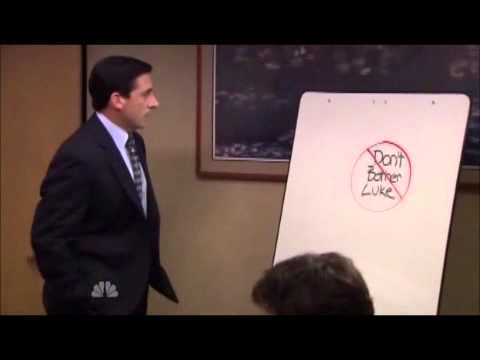
The Office - Don't Bother Luke
In the seventh season of the masterful comedy series *The Office*, viewers are treated to a complex and amusing family dynamic that bursts into the workspace of Dunder Mifflin’s Scranton branch. The episode "Nepotism" centers on Luke Cooper, a lazy new intern who is revealed to be the nephew of Regional Manager Michael Scott. Luke's presence creates immediate tension among the veteran employees, who are forced to contend with a combination of the young nihilist’s blatant lack of professionalism and Michael’s familiar tendency to fiercely—and often blindly—protect those close to him, even at the expense of office productivity. The episode delves deep into the themes of nepotism and its consequences on organizational climate, utilizing the cinematic tools of the mockumentary genre. While Luke flouts simple tasks like ordering coffee or managing the mail, the office staff attempts to form a united front against the preferential treatment he receives. The narrative turning point arrives when Michael is forced to choose between family loyalty and his professional obligations as a manager—a moment that leads to one of the most unforgettable and physical scenes in the series' history: Michael’s "re-education" outburst toward Luke in front of the entire stunned staff. Beyond the comedy, the episode offers a fascinating glimpse into Michael Scott’s past and his desperate need for familial validation. The fact that Michael tries so hard to integrate his nephew into the workplace, despite Luke's obvious failure, underscores the loneliness inherent in his character and his persistent attempt to turn the office into a surrogate family. Luke, portrayed by Evan Peters (who would later become an acclaimed Hollywood star), represents the generational gap and the disdain the younger generation sometimes holds for the traditional world of work. This creates constant friction, sparking reflection on the boundaries of patience and authority in the modern workplace.
The Office REACTION // Season 2 Episode 20 // Drug Testing
The 20th episode of the second season of *The Office* (US), titled "Drug Testing," is widely regarded as one of the series' creative peaks, pushing the character of Dwight Schrute to unforgettable comedic extremes. The plot centers on the discovery of a marijuana cigarette butt in the Dunder Mifflin parking lot—an event that ignites Dwight’s inner detective and his relentless sense of self-righteousness. As a "Volunteer Deputy" for the local sheriff’s department, Dwight takes it upon himself to spearhead an inquisitorial investigation throughout the office. This leads to a series of confrontations and awkward exchanges, particularly with Michael Scott, who fears a recent night at a Grateful Dead concert might compromise his results in the upcoming drug test. Beyond the laughter, the episode offers a deep dive into the complex relationships between the characters. It highlights Dwight’s blind and almost tragic loyalty to Michael—a devotion stretched to its limit when he is forced to choose between his personal code of ethics and protecting his manager. Meanwhile, viewers witness a subtle progression in the tension between Jim and Pam, as Jim is placed under a self-imposed vow of silence after Pam "jinxes" him during a game. This forced quietude creates moments of frustrated, silent intimacy, illustrating the show's mastery of conveying profound emotion without dialogue through its signature realistic situational comedy. From a production and historical standpoint, the episode originally aired in April 2006 and was directed by series creator Greg Daniels. At this stage, *The Office* had already established itself as a cultural phenomenon, moving away from its British origins to develop a unique identity that was warmer and more inherently human. The conference room dynamics, Dwight’s cross-examinations, and the minimalist reactions of the supporting cast transform the episode into a fascinating character study on authority, paranoia, and office hierarchy. Revisiting and analyzing "Drug Testing" reveals how the sharp writing of that era remains relevant and hilarious nearly two decades after its initial broadcast.
The Office REACTION // Season 5 Episode 4 // Baby Shower
The fourth episode of the fifth season of the mockumentary series *The Office*, titled "Baby Shower," marks a dramatic and complex turning point in the twisted relationship between Michael Scott and Jan Levinson. After months of Michael anticipating his role as the "expectant father," the planned gathering at the Dunder Mifflin office exposes the staggering gap between Michael's fantasy and cold reality. Jan arrives at the office having already given birth, a revelation that shatters Michael's confidence and forces him to confront the fact that he has no biological or emotional stake in the life of the baby, Astrid. It is a brilliant display of writing that explores the boundaries of the protagonist's empathy and self-humiliation. Against the backdrop of these events, the episode showcases the show's organizational dynamics at their peak as Dwight Schrute takes it upon himself to test the durability of the baby gear in his uniquely absurd fashion. His rigorous "stress testing" of the stroller has become one of the season's most iconic moments, highlighting the contrast between his rigid rationality and the emotionally charged atmosphere permeating the office. Meanwhile, the staff is forced to navigate Michael’s awkward attempts to display hostility toward Jan (on Holly’s advice) and his ultimate inability to resist his destructive attraction to her. Narratively, "Baby Shower" serves as a critical crossroads for the developing connection between Michael and Holly Flax. The episode's climax does not occur during the confrontation with Jan, but rather in the comforting hug Michael gives Holly at the end of the day. This moment symbolizes the beginning of Michael’s liberation from his obsession with Jan and his realization that a healthy, genuine connection might be right in front of him. The episode masterfully balances side-splitting laughter with a sense of existential dread, demonstrating why *The Office* is considered one of the most brilliant series in documenting the minutiae of daily life and the human psyche.Cookies & Privacy 🍪
We use cookies to improve your experience
For more information, see our Privacy Policy