Tu-95 Bear: The Soviet Strategic Bomber
Description
Tu-95 Bear: The Strategic Soviet Bomber The Tu-95 Bear stands as one of the most powerful and enduring symbols of the Cold War and Soviet air power. This massive aircraft, equipped with four mighty turboprop engines, was developed to provide the Soviet Union with long-range strategic nuclear strike capabilities. It remains one of the most recognizable aircraft in the world of aviation due to its unique design and the signature thunderous roar it produces during flight. Development of the aircraft began in the early 1950s by the Tupolev Design Bureau, in response to an operational requirement to reach targets within the American continent. Its maiden flight took place in 1952, and since then, the Tu-95 has become the backbone of the Soviet deterrence array, performing reconnaissance missions, power projection, and shadowing American aircraft carriers across the high seas. The aircraft was even used to drop the largest hydrogen bomb in history, the Tsar Bomba, in 1961. The most striking technological feature of the Tu-95 is the Kuznetsov NK-12 system—the most powerful turboprop engines in the world—driving pairs of contra-rotating propellers. This configuration allows the aircraft to reach speeds comparable to those of jet aircraft while maintaining exceptional fuel efficiency for ranges spanning thousands of kilometers. Despite its age, the aircraft has undergone extensive upgrades, enabling it to carry modern cruise missiles and advanced electronic warfare systems today. The survival of the Tu-95 Bear in active service for over seven decades raises fascinating questions about long-term engineering design in the face of rapid technological advancement. While modern stealth aircraft enter the arena, the Soviet "Bear" continues to prove that a reliable and straightforward platform can remain relevant even in the 21st century. Its persistent presence in the world's skies remains a living reminder of an era of global rivalry and uncompromising aerospace engineering.
Original title
Tu-95 Bear: המפציץ האסטרטגי הסובייטי
Tu-95 Bear: המפציץ האסטרטגי הסובייטי ה-Tu-95 Bear ניצב כאחד הסמלים העוצמתיים והמתמשכים ביותר של המלחמה הקרה ושל העוצמה האווירית הסובייטית. מטוס ענק זה, המצויד בארבעה מנועי Turboprop עוצמתיים, פותח כדי להעניק לברית המועצות יכולת תקיפה גרעינית אסטרטגית לטווחים ארוכים במיוחד. הוא נותר אחד המטוסים המזוהים ביותר בעולם התעופה בשל המבנה הייחודי שלו והרעש האופייני שהוא מייצר בזמן הטיסה. פיתוח המטוס החל בשנות החמישים המוקדמות על ידי משרד התכנון Tupolev, בתגובה לצורך המבצעי להגיע ליעדים ביבשת אמריקה. הטיסה הראשונה נערכה ב-1952, ומאז הפך ה-Tu-95 לעמוד השדרה של מערך ההרתעה הסובייטי, כשהוא מבצע משימות סיור, השלטת נוכחות וליווי של נושאות מטוסים אמריקאיות בלב ים. המטוס אף שימש להטלת פצצת המימן הגדולה בהיסטוריה, ה-Tsar Bomba, בשנת 1961. המאפיין הטכנולוגי הבולט ביותר של ה-Tu-95 הוא מערכת ה-Kuznetsov NK-12, מנועי הטורבו-פרופ החזקים בעולם, המניעים זוגות של מדחפים הסובבים בכיוונים מנוגדים. תצורה זו מאפשרת למטוס להגיע למהירויות הדומות לאלו של מטוסי סילון, תוך שמירה על יעילות דלק יוצאת דופן לטווחים של אלפי קילומטרים. למרות גילו המתקדם, המטוס עבר שדרוגים מקיפים המאפשרים לו לשאת כיום טילי שיוט מודרניים ומערכות לוחמה אלקטרונית מתקדמות. הישרדותו של ה-Tu-95 Bear בשירות פעיל לאורך שבעה עשורים מעלה שאלות מרתקות על תכנון הנדסי ארוך טווח אל מול התקדמות טכנולוגית מהירה. בעוד מטוסי חמקן חדישים נכנסים לזירה, ה"דוב" הסובייטי ממשיך להוכיח כי פלטפורמה אמינה ופשוטה יכולה להישאר רלוונטית גם במאה ה-21. נוכחותו המתמשכת בשמי העולם נותרה תזכורת חיה לעידן של יריבות גלובלית ושל הנדסה תעופתית חסרת פשרות.
תמלול הסרטון
לסרטון זה אין כתוביות זמינות ביוטיוב.
ניתן ליצור תמלול מקורב באמצעות AI על בסיס פרטי הסרטון.
Related Videos
Hawkeye E-2D: The Navy's AEW Aircraft
The E-2D Advanced Hawkeye serves as the operational backbone of the U.S. Navy’s carrier-based airborne early warning, command, and control capabilities. This unique aircraft functions as the eyes and ears of carrier strike groups, providing a real-time situational picture of aerial and maritime threats over vast distances. The lineage of the series dates back to the early 1960s, when Northrop Grumman developed the initial models to provide perimeter defense for task forces at sea. The E-2D Advanced Hawkeye variant represents a significant technological leap over its predecessors, entering active service to confront the challenges of 21st-century warfare and technology-saturated battlefields. The aircraft's most striking feature is the advanced AN/APY-9 radar, housed within a rotating rotodome atop the fuselage, capable of detecting small targets with low radar cross-sections. Equipped with encrypted communication systems, it facilitates rapid data sharing with fighter jets such as the F-35 Lightning II and F/A-18 Super Hornet, making it a critical force multiplier in integrated combat management. In an era where hypersonic missile threats and unmanned aerial vehicles are becoming increasingly prevalent, the role of the E-2D Hawkeye is more vital than ever for fleet survivability. Its ability to lead National Missile Defense missions and guide precision optics raises the question of how U.S. air superiority will evolve in the face of tomorrow's electronic warfare and jamming technologies.
F-117: The Stealth Jet That Changed Warfare
The development of the F-117 Nighthawk marked the dawn of a new era in military aviation, where the ability to evade radar detection became the most decisive weapon on the battlefield. This revolutionary attack aircraft was the first practical application of stealth technology, designed to penetrate the world’s most sophisticated integrated air defense systems without leaving a trace. The project’s roots lie in Lockheed Martin’s secret "Have Blue" program, conducted under a heavy veil of secrecy at the famed Skunk Works during the 1970s. In 1981, the first production model took to the skies for its maiden flight, yet the aircraft’s existence remained a closely guarded state secret until its official public unveiling in 1988. During military operations such as Desert Storm, the F-117 proved its surgical precision by destroying strategic targets in the heart of heavily defended Baghdad. The aircraft's distinctive design, composed of flat surfaces intersecting at sharp angles, was engineered to deflect radar waves away from their source. The fuselage was coated with specialized radar-absorbent materials (RAM) and powered by two General Electric F404 non-afterburning engines to minimize its thermal signature. Despite its futuristic appearance, many of its internal systems were adapted from proven technologies found in existing models like the F-16 and A-10, allowing for a faster and more efficient development process. The legacy of the F-117 extends far beyond its years of operational service, as it paved the way for even more advanced platforms like the F-22 Raptor and the F-35 Lightning II. The downing of a single aircraft over Serbia in 1999 highlighted that even stealth technology is not entirely invincible; however, it underscored that modern air superiority depends on the ability to remain invisible. To this day, the F-117 remains an icon representing the pinnacle of technological innovation and engineering audacity of the 20th century.
RC-135 Rivet Joint: The Air Force's Top Spy Plane
The RC-135 Rivet Joint serves as the spearhead of the American aerial intelligence apparatus, functioning as a high-powered platform for real-time signals intelligence and data decryption. This unique aircraft is designed to detect, locate, and analyze the electronic emissions of hostile forces across the globe. Through its advanced capabilities, it provides commanders in the field with a precise and critical situational awareness necessary for deciding the outcome of complex campaigns. The aircraft's development was based on the Boeing C-135 Stratolifter platform, adapted to meet the evolving needs of the US Air Force during the Cold War. Since entering service, the Rivet Joint has played an active role in nearly every major conflict involving the United States, from Vietnam to modern operations in the Middle East and Eastern Europe. Its operational history is defined by clandestine missions far from the public eye, maintaining intelligence superiority against rival superpowers. Technically, the RC-135 is equipped with a sophisticated sensor suite, including SIGINT and ELINT systems housed in the distinctive fairings along its fuselage and nose. The crew consists of pilots supported by dozens of electronic warfare officers and intelligence analysts who operate advanced encryption and satellite communication technologies. Its aerial refueling capability allows it to remain over areas of interest for extended periods, making it one of the most vital strategic assets in the Pentagon's arsenal. In an era where electronic warfare and information are the keys to victory, the importance of the Rivet Joint only grows in the face of emerging threats and cutting-edge air defense technologies. The remaining question is how the manned RC-135 fleet will evolve alongside the massive shift toward unmanned aerial vehicles and microsatellites. Despite these new technologies, this veteran aircraft continues to prove that there is no substitute for a skilled human and technological presence at the heart of the theater of operations.
C-130 Hercules: The Workhorse of the Skies
The C-130 Hercules is widely regarded as one of the most versatile and rugged aircraft in the history of military and civil aviation. Originally designed as a tactical transport aircraft capable of operating in harsh field conditions, it has evolved over the decades into a multi-purpose platform utilized for a vast array of missions. From search and rescue to ground attack, this aircraft has come to redefine the very concept of a "workhorse." Development of the aircraft began in the early 1950s by Lockheed, following the U.S. Air Force's need for a modern transport plane to replace the aging C-47 Skytrain and C-119 Flying Boxcar. Since its maiden flight in 1954, the C-130 Hercules has participated in every major global conflict, demonstrating exceptional reliability in the Vietnam War and playing a pivotal role in complex logistical operations. It holds the impressive record for the longest continuous production run of any military aircraft in history. Technically, the aircraft is equipped with four turboprop engines that provide immense thrust and the capability for Short Takeoff and Landing (STOL) from unpaved, rugged airstrips. Its unique configuration features a large rear loading ramp, allowing for the rapid deployment of heavy equipment, vehicles, and paratroopers. More advanced variants, such as the C-130J Super Hercules, incorporate digital avionics and enhanced engines that extend both the aircraft's flight range and payload capacity. The story of the C-130 Hercules is a testament to ingenious engineering that was ahead of its time, remaining vital even in the modern jet age. Despite its venerable age, it continues to serve in dozens of air forces worldwide, acting as the backbone of transport fleets and humanitarian aid missions. The question facing aviation experts today is not whether a replacement will be found, but for how many more decades this iconic design will continue to dominate the skies.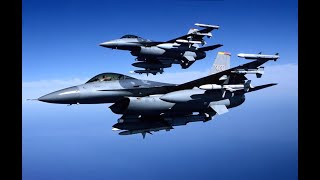
Have Blue: The Stealth Prototype Story
The Have Blue project represents one of the most significant technological breakthroughs in the history of modern aviation, serving as the first practical foundation for operational stealth capabilities. This overview reveals how a small group of engineers managed to design an aircraft nearly invisible to radar systems, forever altering the nature of aerial warfare. Development of the Have Blue began in the 1970s within the secret laboratories of Lockheed Martin, under the famed Skunk Works division. The program was based on complex physical theories regarding radio wave reflection and led to the construction of two prototypes that were significantly smaller than the final fighter jet. Testing was conducted at the isolated Area 51 site, far from prying eyes, under a heavy veil of classification and with direct funding from DARPA and the U.S. Air Force. Technically, the unique design relied on flat surfaces and sharp angles intended to deflect radar radiation away from its source—an approach known as "faceting." To overcome the aerodynamic instability inherent in such an unconventional structure, the project utilized groundbreaking Fly-By-Wire technology, allowing a computer to control the aircraft's flight surfaces. Although both prototypes were lost during test flights due to technical failures, the data collected proved that stealth was an attainable goal. The success of Have Blue paved the way directly for the production of the F-117 Nighthawk, the world’s first operational stealth attack aircraft. The legacy of these prototypes is still evident today in all of America’s advanced aircraft, from the B-2 Spirit to fifth-generation fighters like the F-22 Raptor and F-35 Lightning II. The program remains a testament to the human capacity to transform abstract scientific theory into a weapon that shifted the global balance of power.
Tu-160: The White Swan Strategic Bomber
The Tu-160, known in Russia as the "White Swan" and designated by NATO as the "Blackjack," is the heaviest and fastest supersonic strategic bomber ever built. Designed as a Soviet response to American bombers during the Cold War, its primary mission is the delivery of nuclear weapons and long-range cruise missiles. Its ability to combine supersonic speeds with a massive payload capacity makes it one of the most formidable assets in the history of military aviation. Development of the aircraft began in the 1970s at the Tupolev Design Bureau, with its maiden flight taking place in 1981. It entered active service with the Soviet Air Force in the late 1980s, posing a significant technological challenge to the U.S. Air Force's B-1 Lancer. Over the years, the aircraft has undergone extensive modernization to adapt to the modern battlefield, including the introduction of the upgraded Tu-160M variant, which features advanced radar and defense systems. Technically, the Tu-160 is characterized by its variable-geometry "swing wings," which allow it to reach speeds exceeding Mach 2 and a flight range of thousands of kilometers without refueling. It is powered by four massive NK-32 engines, considered the most powerful jet engines ever installed on a combat aircraft. Its unique aerodynamic structure, coated in a brilliant white finish designed to reflect thermal radiation from nuclear explosions, gives the aircraft both its iconic appearance and its famous nickname. Today, the Tu-160 remains the backbone of Russia’s nuclear deterrent and continues to participate in strategic patrol missions across the globe. Its ongoing operation raises fascinating questions about the future of heavy bombers in an era of hypersonic missiles and sophisticated air defense systems. The fusion of classic Soviet engineering with modern navigation technologies ensures that the White Swan will remain a significant factor in the global balance of power for years to come.
Cold War Spy Planes SR-71 and U-2
The saga of the legendary Cold War-era spy planes reveals the pinnacle of American technological prowess in its intelligence struggle against the Soviet Union. At the heart of this narrative stand the SR-71 Blackbird and the U-2 Dragon Lady, two aircraft that transformed the face of reconnaissance and redefined the limits of the flight envelope. Each was engineered for one clear mission: to penetrate the world's most heavily protected airspace and return with high-quality imagery capable of deciding political fates. Development of these aircraft began in the 1950s and 60s under a heavy veil of secrecy at Lockheed Martin's "Skunk Works" facility, led by the legendary engineer Kelly Johnson. The U-2 was initially operated by the CIA and provided critical intelligence during the Cuban Missile Crisis, while the SR-71 was born out of the need for a faster, stealthier jet capable of outrunning advanced surface-to-air missiles. These aircraft operated at immense altitudes, requiring pilots to wear pressure suits similar to those worn by NASA's Apollo astronauts. Technically, the SR-71 remains the fastest manned air-breathing aircraft in history, capable of flying at speeds exceeding Mach 3 thanks to its unique J58 engines and a structure composed largely of titanium. In contrast, the U-2 was designed as a powered glider with exceptionally long wings, allowing it to cruise in the region known as the "Coffin Corner," where the air is extremely thin and controlling the aircraft requires supreme skill. The combination of advanced optical photography and electronic warfare systems made them irreplaceable strategic assets, even in the age of satellites. The legacy of the SR-71 and the U-2 continues to resonate within the intelligence community and the U.S. Air Force, with the latter still in active service decades after its maiden flight. The question of whether modern stealth technologies and unmanned drones can ever match the daunting presence of these "titans of the sky" remains open. Their story is a testament to an era where human audacity and extreme engineering pushed the boundaries of possibility in the global arms race.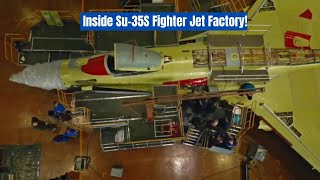
How the P-8 Poseidon Tracks Submarines
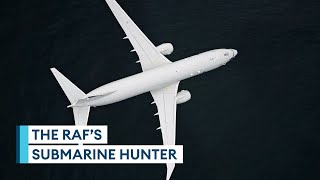
The P-8 Poseidon is widely regarded as one of the world's most advanced aircraft for anti-submarine warfare (ASW) and maritime intelligence missions. It merges long-range flight capabilities with next-generation sensing systems to detect, track, and respond to underwater threats. The aircraft serves as the spearhead for the U.S. Navy and its allies in defending strategic shipping lanes against silent attack submarines. Developed by Boeing based on the familiar civilian 737-800ERX platform, the aircraft was designed to replace the legendary P-3 Orion. Since entering operational service, it has redefined the maritime arena through its transition to jet propulsion, allowing for rapid deployment to mission zones and extended loitering at high altitudes. This combination provides operators with a significant tactical advantage in identifying hostile activity across vast stretches of ocean. The core of the P-8 Poseidon’s power lies in its sensor suite, which includes the APY-10 radar—capable of detecting exceptionally small targets on the water's surface—alongside advanced electro-optical systems. The aircraft deploys dozens of sonobuoys that transmit real-time acoustic data, which is then analyzed by complex computing systems within the operations cabin. Furthermore, it is equipped with an internal weapons bay and external hardpoints to carry Harpoon missiles and Mark 54 torpedoes, making it a lethal strike platform. In an era where submarines are becoming quieter and harder to locate, the P-8 Poseidon stands as the decisive technological answer for maintaining maritime superiority. Its ability to operate in total coordination with unmanned aerial vehicles (UAVs) like the MQ-4C Triton creates a comprehensive defense network covering larger areas than ever before. It remains to be seen how this technological race between the depths and the skies will continue to shape future global conflicts.
F/A-18 Super Hornet vs F-14 Tomcat
The struggle for dominance on the flight decks of U.S. Navy aircraft carriers reaches its peak in a confrontation between two of the most iconic fighter jets in aviation history. This overview examines the technological and operational transition from the F-14 Tomcat, which ruled the skies for decades, to the F/A-18 Super Hornet that stepped into its formidable shoes. It is an in-depth analysis of naval combat doctrine and the fascinating questions surrounding the retirement of the world’s most famous interceptor. The F-14 Tomcat entered service in the 1970s as a response to long-range threats from the Soviet Union, equipped with its signature variable-sweep wings and a lethal weapons system. In contrast, the Boeing F/A-18 Super Hornet was developed as a multi-role platform tailored for the modern era of the battlefield. While the Tomcat became a cultural icon thanks to its raw speed and power, the Super Hornet introduced higher reliability and lower maintenance costs, leading to a strategic shift in the U.S. Navy’s force structure. Technically, the F-14 excelled in flight range and its capacity to carry AIM-54 Phoenix missiles designed for ultra-long-range interception—a capability its successor lacked in its early days. On the other hand, the F/A-18 Super Hornet features advanced avionics, a fully digital glass cockpit, and superior survivability in diverse strike missions. The comparison focuses on radar performance, maneuverability in close-quarters dogfights, and the effectiveness of each aircraft in environments saturated with modern threats. The debate among aviation enthusiasts and military experts remains open years after the F-14 Tomcat’s retirement from active service. Did the Navy sacrifice raw power and strategic reach in favor of economic efficiency and operational versatility? This question continues to echo through the halls of the Pentagon, especially as new aircraft like the F-35 Lightning II begin to take their place at the forefront of 21st-century military technology.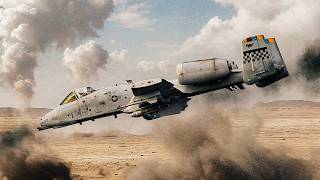
Ejection Seat: How It Saves Lives
The ejection seat is one of the most complex and vital systems in the world of military aviation, serving as the final line of defense for pilots in extreme situations. Its development was driven by the need to overcome the dangers of abandoning high-speed aircraft, where G-forces and wind resistance make manual bailout impossible. The system integrates precision engineering, pyrotechnics, and flawless timing to extract a crew member in a fraction of a second. The operational necessity for a mechanized ejection system arose during World War II as aircraft performance improved and speeds increased. Companies such as Germany's Heinkel and Britain's Martin-Baker were pioneers in the field, with the first tests conducted on models like the He 219. With the introduction of the first operational jet aircraft—from the F-86 to the most advanced modern generations—the ejection seat became a mandatory safety standard in every modern combat aircraft. The ejection process is an automated sequence triggered by the pull of a handle, involving the jettisoning of the canopy, the firing of acceleration rockets beneath the seat, and the stabilization of the chair in mid-air. Modern technologies such as the ACES II, installed in F-15 and F-16 fighters, or the MK16 used in the F-35, allow for "zero-zero" ejections—meaning extraction at zero altitude and zero airspeed. These systems include sensors that analyze speed and altitude in real-time to determine the precise timing for parachute deployment and the separation of the seat from the pilot. Despite being a life-saver, using an ejection seat subjects the human body to immense physical stress that can lead to spinal injuries. The challenge facing engineers today is how to improve pilot survivability at supersonic speeds and altitudes that push the boundaries of the atmosphere. As aircraft technology becomes increasingly autonomous, escape systems continue to evolve, ensuring the human element remains protected even under the harshest conditions.
B-58 Hustler Documentary
The development and operational deployment of the B-58 Hustler symbolize one than the most fascinating eras in Cold War aircraft design. As the world's first strategic bomber capable of exceeding Mach 2, it was designed to provide a swift, deterrent response to the Soviet Union's air defense systems. By combining extreme speed with the capacity to carry nuclear weapons, it set a new standard for engineering audacity in the global skies. Manufactured by Convair, the aircraft entered operational service with the United States Strategic Air Command during the early 1960s. At a time when the arms race was reaching its peak, the B-58 Hustler was built to penetrate deep into enemy territory at high altitudes and speeds faster than any Soviet interceptor of the era. Despite its innovation, the aircraft demanded exceptional flying skills from its aircrews, making it one of the most challenging and prestigious platforms in the American fleet. Technically, the aircraft was characterized by its large delta wing and four General Electric J79 engines that provided immense thrust. One of the most unique elements of the B-58 Hustler was its external configuration, which featured a detachable ventral pod for carrying bombs and fuel, allowing the aircraft to maintain a clean aerodynamic profile. Additionally, it was the first aircraft to utilize aluminum honeycomb sandwich panels and sophisticated crew escape capsules designed to protect personnel during supersonic ejections. The legacy of the B-58 Hustler remains a subject of debate due to high maintenance costs and shifting military doctrines following the introduction of advanced surface-to-air missiles. While its service life was relatively brief, it remains a symbol of an era where speed was considered the ultimate key to strategic survival. Its story raises poignant questions about the boundary between technological breakthroughs and economic or operational feasibility in the ever-changing battlefield of the 20th century.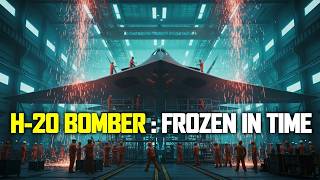
F-35 Adir: Israel's Game-Changing Fighter
The F-35 "Adir" represents the cutting edge of Israeli aerial supremacy, and its integration into the Air Force’s operational line-up is redefining the modern battlefield. This overview examines how Lockheed Martin's advanced platform was tailored to the unique strategic needs of the State of Israel, incorporating indigenous "Blue and White" systems that transform it into a one-of-a-kind aircraft in the world. The project's roots lie in the international Joint Strike Fighter program, but the Israeli version was granted a special status thanks to close cooperation between NASA, the U.S. Department of Defense, and Israel’s defense industries. Since the arrival of the first aircraft at Nevatim Airbase in 2016, the F-35 Adir has become a critical component in complex strikes and intelligence gathering across distant and high-threat theaters in the Middle East. Technologically, the aircraft excels with advanced stealth capabilities that allow it to penetrate radar networks and sophisticated missile batteries like the S-300. Its specifications include a smart helmet developed by Elbit Systems, providing the pilot with a 360-degree situational awareness, and electronic warfare systems manufactured by Israel Aerospace Industries that grant an absolute tactical advantage over fourth-generation aircraft such as the F-15 or F-16. The impact of the F-35 Adir extends beyond direct strike capabilities; it serves as a flying computing hub that manages communication networks between ground and air forces. As regional threats become increasingly complex, the question remains how this technology will continue to evolve against tomorrow's challenges and whether technological superiority alone will be enough to maintain deterrence over the long term.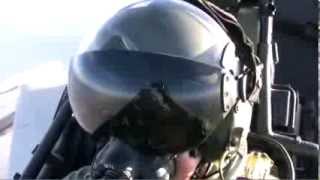
V-22 Osprey: The Aircraft That Shouldn't Fly
The V-22 Osprey stands as one of the most ambitious and controversial aircraft ever built, bridging the gap between the vertical takeoff capabilities of a helicopter and the speed and range of a turboprop airplane. This project explores the groundbreaking engineering of tiltrotor technology, which allows the engines to rotate on their axis during flight, transitioning seamlessly between a hover and forward cruise. This aircraft is widely considered an engineering miracle that successfully defied the conventional laws of physics on the modern battlefield. The roots of its development began in the wake of the failed Operation Eagle Claw in 1980, which highlighted the desperate need for a versatile aircraft capable of operating without long runways. Bell Helicopter and Boeing joined forces to realize this vision, but the path was fraught with budgetary hurdles, political opposition, and fatal accidents during the early testing phases. Despite repeated calls to cancel the project, the Osprey eventually entered operational service with the United States Marine Corps and the U.S. Air Force, fundamentally transforming military logistics. Technically, the V-22 is equipped with twin Rolls-Royce AE 1107C engines driving massive 11.6-meter diameter proprotors. Its complex fly-by-wire systems and interconnected driveshafts allow the aircraft to remain airborne even if one engine fails—an unprecedented technological feat for its time. The airframe is constructed largely from composite materials to reduce weight while maintaining structural integrity under the immense pressures exerted during the transition between flight modes. Today, after decades of operational service in Iraq, Afghanistan, and various humanitarian rescue missions, the V-22 Osprey continues to spark intense debate regarding its safety and cost-effectiveness. The question of whether it represents a dazzling technological triumph or a dangerous engineering compromise remains open, even as other militaries around the world consider adopting the platform. Yet, the Osprey's influence on the future of aviation is already evident in the development of next-generation aircraft seeking to replicate its unique capabilities in both the civilian and military sectors.
Operation Mole Cricket: Israel Destroys Syrian SAMs
Operation Mole Cricket 19 is considered one of the largest and most significant aerial battles in modern history, during which the Israeli Air Force succeeded in destroying the Syrian air defense array in Lebanon's Beqaa Valley. This brilliant maneuver changed the face of warfare, demonstrating absolute technological and tactical superiority against advanced Soviet equipment that had previously been considered an impenetrable threat. The event took place in June 1982, during the First Lebanon War, as a response to the deployment of SA-2, SA-3, and SA-6 missile batteries that restricted Israel’s freedom of aerial operation. The IDF was forced to address the lessons of the Yom Kippur War, where SAM systems had caused heavy losses, and to develop a strategy that would allow for the rapid and precise neutralization of enemy arrays without losing attacking aircraft. The operation featured the groundbreaking use of unmanned aerial vehicles (UAVs) for real-time intelligence gathering and the deception of Syrian radar systems. F-15 and F-16 fighter jets operated in perfect coordination with electronic warfare aircraft and guided weapon systems, leading to the destruction of 19 missile batteries and the downing of dozens of Syrian MiG-21 and MiG-23 jets within just a few hours. The phenomenal success of the operation echoed around the world, leading to a profound conceptual shift among Western powers and the Soviet Union regarding the effectiveness of mobile air defense systems. The combination of technological innovation, precise intelligence, and operational daring set a new standard for integrated aerial warfare, leaving open questions about the future of the struggle between the fighter jet and the surface-to-air missile on the modern battlefield.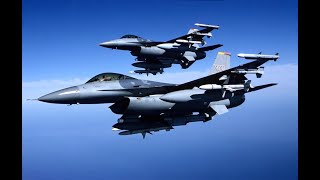
S-400 Triumf: Russia's Air Defense System
The S-400 Triumf is currently regarded as one of the most advanced and lethal air defense systems in the world, serving as the backbone of Russia's aerospace defense network. The system is designed to provide a multi-layered response to a wide range of aerial threats, ranging from fighter jets to ballistic missiles and unmanned aerial vehicles. Its capabilities go far beyond simple territorial defense, acting as a strategic tool that restricts the freedom of movement of hostile forces across vast expanses of airspace. The development of the system began in the late 1990s by Almaz-Antey, as a direct evolution of the veteran S-300 model. It entered operational service with the Russian military in 2007, and has since become a focal point of geopolitical controversy due to its sale to countries such as Turkey, India, and China. These deals have sparked heavy tensions with NATO and the United States, as integrating the system into alliance-member nations is viewed as a security and technological threat to Western air superiority. Technically, the S-400 is capable of locking onto targets at a range of up to 400 kilometers and intercepting them at varying altitudes reaching into the stratosphere. The system is equipped with a powerful radar capable of tracking hundreds of targets simultaneously and guiding various types of missiles, including the long-range 40N6E. Its modular architecture allows for rapid deployment in the field, making it a difficult target for enemy forces to locate and destroy. The S-400’s impact on the global balance of power is decisive, as it provides its operators with a capability known as A2/AD (Anti-Access/Area Denial). This capability directly challenges stealth aircraft such as the F-35 and F-22, forcing Western war planners to recalibrate their strategies regarding air supremacy. The remaining question is whether the system will manage to maintain its relevance in the face of the next generation of hypersonic missiles and advanced electronic warfare technologies.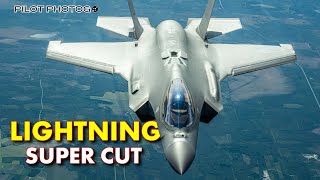
Rafale: The French Fighter Conquering The World
This in-depth review explores the rise of the Dassault Rafale, the multi-role fighter jet that evolved from an ambitious vision of French industry into one of the most sought-after aircraft in the global defense market. The analysis examines how Dassault Aviation succeeded in creating an autonomous platform that integrates strike capabilities, air defense, and nuclear deterrence within a single airframe. The project's roots lie in France's strategic decision in the 1980s to withdraw from the Eurofighter program to maintain full technological sovereignty. Since the prototype's maiden flight in 1986, the aircraft has undergone an impressive evolutionary process, proving its superiority in complex combat theaters across Afghanistan, Libya, and Mali. The history of the Rafale stands as a testament to exceptional engineering prowess that managed to overcome decades of political and budgetary challenges. Technologically, the aircraft is equipped with cutting-edge avionics, including the RBE2 AESA radar and the SPECTRA integrated electronic warfare system, which provides high survivability against modern threats. Its aerodynamic design, featuring delta wings and canards, grants it extraordinary maneuverability and a wide operational range—particularly in the models operated by the Marine Nationale from aircraft carriers. Its versatile payload capacity renders it a "force multiplier" capable of replacing several aircraft types simultaneously. The meteoric sales success in recent years to nations such as India, Egypt, and the United Arab Emirates marks a significant geopolitical shift in the international arms market. While the American F-35 enjoys widespread popularity, the Rafale is establishing itself as a powerful and independent alternative, offering strategic flexibility to nations seeking uncompromising air superiority. The remaining question is how this aircraft will continue to integrate into the future battlefield alongside unmanned technologies and new European collaborations.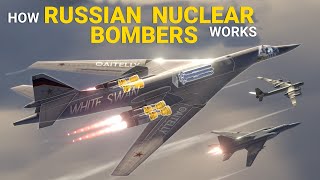
MQ-9 Reaper: America's Hunter-Killer Drone
The MQ-9 Reaper represents the cutting edge of modern asymmetric warfare, serving as the backbone of the United States' offensive unmanned aerial vehicle (UAV) fleet. This overview explores the unique capabilities of this remotely piloted aircraft, which has transformed the battlefield by combining long-endurance persistence with lethal firepower. It is a strategic weapon system that enables real-time intelligence gathering and precision strikes with minimal risk to human life. Developed by General Atomics, the MQ-9 Reaper's inception was a direct response to the operational need to upgrade the legendary MQ-1 Predator. Since its maiden flight in the early 2000s, the drone has become a central tool for the U.S. Air Force and the CIA across the Middle East and other global theaters of operation. It has played a decisive role in complex counter-terrorism missions and provided close air support to ground forces in intricate tactical scenarios. Technically, the MQ-9 Reaper is equipped with a powerful turboprop engine, allowing it to carry a significant payload of munitions, including AGM-114 Hellfire missiles and GBU-12 Paveway II laser-guided bombs. Its advanced electro-optical systems, paired with the AN/APY-8 Lynx radar, provide ground operators with high-resolution identification and tracking capabilities, even in adverse visibility. The ability to remain airborne for over 24 consecutive hours makes it a restless hunter in enemy skies. The MQ-9 Reaper’s global presence raises significant ethical and strategic questions regarding the future of mechanized warfare and its implications for national sovereignty. The massive shift toward unmanned platforms is reshaping 21st-century combat doctrine and setting a new technological gold standard for global powers. As technology continues to advance, it remains to be seen how future autonomous systems will ultimately alter the global balance of power.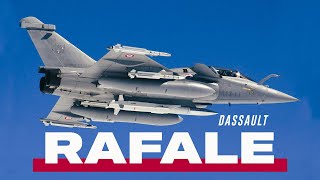
XB-70 Valkyrie: The Mach 3 Bomber That Never Was
The XB-70 Valkyrie bomber represents one of the most ambitious endeavors in the history of military aviation—an aircraft designed to penetrate deep into Soviet territory at record-breaking speeds. This project pushed the physical boundaries of aeronautical engineering in the 1960s, attempting to create a combat aircraft capable of cruising at Mach 3 at extreme altitudes. Development began during the Cold War in response to the U.S. Air Force's need for a strategic bomber that could evade Soviet air defense systems. North American Aviation led the complex design process, but the emergence of advanced Surface-to-Air Missiles (SAMs) and shifting defense priorities ultimately led to the cancellation of the operational program. Only two prototypes were ever built, and they transitioned into invaluable research platforms for NASA. Technically, the XB-70 Valkyrie was an engineering masterpiece that utilized "compression lift" technology to generate additional lift at high speeds. The fuselage was constructed from stainless steel and titanium to withstand extreme temperatures, powered by six mighty General Electric YJ93 engines. Its unique design featured folding wingtips that increased stability during supersonic flight, giving it a futuristic appearance that is still considered groundbreaking today. Although the project never reached mass production, the legacy of the XB-70 Valkyrie lives on in the world of modern aviation. Data gathered during its test flights contributed significantly to the development of the SR-71 Blackbird spy plane and supersonic passenger transport programs. The story of this bomber remains a fascinating reminder of an era when the boundaries of science and imagination merged into one breathtaking flying machine.
Why The B-52 Will Fly For 100 Years
The B-52 Stratofortress’s ability to remain relevant on the modern battlefield, seven decades after its maiden flight, is one of the most fascinating phenomena in aviation history. This overview examines the unique combination of robust engineering and structural flexibility that allows this strategic bomber to undergo constant technological adaptations. It is the story of an aircraft designed in another era that continues to serve as a central backbone of U.S. air power. Boeing’s legendary aircraft entered operational service in the 1950s, at the height of the Cold War, with the primary mission of carrying nuclear weapons over long distances. Over the years, it has participated in countless conflicts—from Vietnam to the Persian Gulf—proving its extraordinary resilience against far more advanced weapon systems. While newer and more expensive aircraft have been retired, the B-52 has continued to clock flight hours, maintaining its status as a reliable and versatile platform. To ensure its continued operation into the 2050s, the fleet is undergoing massive upgrades, including the replacement of its engines with advanced Rolls-Royce models and the installation of sophisticated radar systems. The B-52's mechanical airframe allows it to carry a vast array of ordnance, from classic "iron bombs" to cutting-edge hypersonic missiles and precision-guided munitions. These improvements to the cockpit and communication suites are transforming it into a digital war machine, fully integrated into the U.S. Air Force's modern data networks. The decision to keep the aircraft in active service for over a century raises fundamental questions about the balance between innovation and proven efficiency. Is it possible that fundamentally simple, "analog" engineering can outperform the complexity of modern stealth aircraft in terms of cost-effectiveness? The future of the B-52 represents an unprecedented chapter where the past and future of military aviation meet on a single runway.
Inside the Cockpit of an F-22 Raptor
The F-22 Raptor is considered one of the most advanced engineering marvels ever produced, redefining the very concept of air superiority in the modern era. This overview reveals the revolutionary technologies that allow the aircraft to operate with an ultra-low radar cross-section while maintaining extraordinary maneuverability. Through a closer look at its avionics systems and sophisticated interface, one can understand how this complex machine provides the pilot with a decisive advantage in the digital drawing board of the modern battlefield. Developed by Lockheed Martin, the aircraft began as a response to the U.S. Air Force's need for a fifth-generation fighter capable of countering future threats. Since its maiden flight and the commencement of operational service, the F-22 Raptor has established itself as an irreplaceable strategic asset, blending supersonic "supercruise" speeds without the use of afterburners with stealth capabilities that leave the enemy blind. The aircraft’s history is paved with immense engineering challenges and massive budgets invested to guarantee its absolute dominance in the skies. At the heart of the cockpit sits a complex display system that fuses data from various sensors into a single, clear tactical picture, allowing the pilot to make split-second decisions. The implementation of thrust-vectoring technology gives the aircraft the ability to redirect the engine thrust of its Pratt & Whitney F119 powerplants, enabling sharp, unpredictable turns that are impossible for conventional jets. Furthermore, the airframe and unique coating materials are designed to absorb and deflect radar waves, rendering it virtually invisible to enemy defense systems. The F-22 Raptor’s impact on aerial combat doctrine is immense, and it continues to serve as a symbol of American technological supremacy despite the cessation of its production in favor of newer projects. The mystery surrounding some of its classified capabilities continues to ignite the imagination of aviation enthusiasts and military strategists worldwide. Whether future generations of aircraft will manage to replicate this perfect fusion of raw physical power and artificial intelligence remains to be seen, or perhaps we are standing on the threshold of a new era of unmanned warfare.Cookies & Privacy 🍪
We use cookies to improve your experience
For more information, see our Privacy Policy