Skip to main content












Rewinding Time to Explore the Big Bang | BBC Earth Science
Description
BBC Earth uses cutting-edge technology to journey 13.8 billion years back in time and explore the origin of our improbable cosmic odyssey.
Original title
מחזירים את הזמן לאחור אל המפץ הגדול | BBC Earth Science
BBC Earth מציגים מסע מרהיב באמצעות טכנולוגיה מתקדמת, חזרה של 13.8 מיליארד שנה אל ראשית הזמן, כדי לחקור את מקורותיו של היקום שלנו ואת המסע הקוסמי הבלתי-סביר שהוביל לקיומנו.
תמלול הסרטון
לסרטון זה אין כתוביות זמינות ביוטיוב.
ניתן ליצור תמלול מקורב באמצעות AI על בסיס פרטי הסרטון.
Related Videos
No Subtitles
🇮🇱 Hebrew
No Subtitles
🇮🇱 Hebrew
No Subtitles
🇮🇱 Hebrew
No Subtitles
🇮🇱 Hebrew
No Subtitles
🇮🇱 Hebrew
No Subtitles
🇮🇱 Hebrew
No Subtitles
🇮🇱 Hebrew
No Subtitles
🇮🇱 Hebrew
Another UFO caught on tape at Tel Aviv Israel - 28 April ...
Another thrilling piece of video evidence joins the growing list of UFO (Unidentified Flying Object) sightings over Israeli skies. This latest footage, captured in Tel Aviv on April 28th, features a mysterious object exhibiting maneuvers that defy standard aviation technology as we know it today. This recording adds to a wave of similar reports in recent years, reigniting the fascinating question: Are we alone, or are non-terrestrial entities frequently visiting Middle Eastern airspace? Israel, and specifically the densely populated Gush Dan region, has become a focal point for UFO researchers due to its high population density and the massive presence of advanced radar and security systems. The history of sightings in Israel is rich and diverse, ranging from the famous Kadima incident in the 1990s to testimonies provided by pilots and security personnel. This current documentation over Tel Aviv raises many questions—is it an experimental unmanned aerial vehicle (UAV), an optical phenomenon caused by light refraction in the atmosphere, or indeed an extraterrestrial craft displaying extreme maneuvering capabilities? From a scientific perspective, the study of UAPs (Unidentified Anomalous Phenomena) has recently experienced a renaissance, gaining legitimacy from official bodies such as NASA and the Pentagon in the United States. The release of official reports acknowledging the existence of these phenomena indicates that the subject no longer belongs solely to the realms of science fiction or conspiracy theories. Recordings like the one before you serve as a vital foundation for data collection; such videos are scrutinized under a digital microscope to identify heat signatures, angular velocity, and the absence of visible propulsion systems—traits that characterize many of the most mysterious sightings. The public is invited to examine the footage carefully: pay close attention to the object's speed relative to the clouds or ground structures, and look for any sudden changes in direction. Often, what appears to be a simple point of light is revealed after in-depth analysis to be a solid object with anomalous physical characteristics. We invite you to share your thoughts in the comments—do you believe this is definitive proof of an alien visit, or is there a rational, earthly explanation that we simply aren't aware of yet?4/10/2026
No Subtitles
🇮🇱 Hebrew
No Subtitles
🇮🇱 Hebrew
No Subtitles
🇮🇱 Hebrew
No Subtitles
🇮🇱 Hebrew
No Subtitles
🇮🇱 Hebrew
No Subtitles
🇮🇱 Hebrew
Real Flying Saucers Built and Flown on Earth
At the height of the Cold War, as the dread of Soviet bombardment and the frantic Space Race fueled the world's most brilliant minds, some of the most ambitious and bizarre projects in aviation history were born. The human quest to build a "flying saucer" that would change the rules of the game was not confined to science fiction; it was a fascinating military and technological reality. Canada's ambition to position itself at the forefront of global technology, combined with the bold and cunning vision of British aircraft designer Jack Frost, led to the development of a disc-shaped craft that looked as if it had been pulled from another planet. The Avrocar project, funded largely by the United States military, attempted to harness the "Coanda effect" to create a vehicle capable of Vertical Take-Off and Landing (VTOL) and supersonic flight at extreme altitudes. The goal was to produce a multi-purpose craft that would replace both jeeps on the ground and fighter jets in the sky, all while evading Soviet radar and providing a decisive strategic advantage in the event of nuclear conflict. However, the reality in the field was far more complex than the blueprints suggested. Despite its futuristic design and grand promises, the real-life flying saucer encountered severe stability issues and performance levels that fell far short of the original targets. Instead of soaring at high altitudes, the Avrocar struggled to rise more than a few meters above the ground, making it more of an early "hovercraft" than an intergalactic fighter jet. The aerodynamic instability of the circular structure posed engineering challenges that even the greatest minds of the 1950s could not fully solve. The story of Earth's man-made flying saucers is a testament to an era of boundless creativity, where the line between the impossible and the possible was blurred by the pressures of national security. It remains a mysterious and intriguing chapter in aviation history, exploring how daring engineering experiments—even those that failed—paved the way for the modern technologies we know today. This video dives behind the scenes of secret tests, political interests, and engineering that aimed for the stars but remained grounded.4/10/2026
No Subtitles
🇮🇱 Hebrew
The Man Who Loved UFOs Official Trailer Netflix
Argentina in the 1980s was fertile ground for fantastic stories, but no one captured the public imagination quite like José de Zer. The charismatic and controversial journalist embarked on a boundary-pushing journey in search of evidence for aliens and extraterrestrial civilizations. However, rather than settling for dry reporting, de Zer chose a far bolder method: he didn't shy away from forging evidence, building fictitious displays, and employing cinematic manipulations that turned every routine news broadcast into the best theatrical show in town. The film *The Man Who Loved UFOs* dives into an era where the lines between investigative journalism and pure entertainment completely blurred. Armed with a microphone and a loyal camera crew, de Zer managed to sweep an entire nation into a "media circus" revolving around the UFO phenomenon. He transformed Argentina's mysterious hills into pilgrimage sites, utilizing dramatic cinematography and suspenseful narratives to infect millions of viewers with "alien fever," all while hand-crafting his own mythology. Beyond the personal story of a colorful journalist, the work touches on a broader cultural phenomenon—the human need to believe in something greater than ourselves, and the ease with which truth can be manipulated in the television age. De Zer was not merely a hoaxer; he was a master storyteller who understood before anyone else that the audience thirsted for mystery, even if it was manufactured in a studio or in the field with cheap props. The film portrays the personal and professional toll of living within a lie, as well as the hypnotic magic of the flying saucers that managed to make an entire nation look up toward the stars. Netflix's new comedy-drama invites viewers on a nostalgic and spectacular journey behind the scenes of one of the most fascinating deceptions in the history of South American media. It is a portrait of a man who loved fame, the camera, and perhaps most of all—the idea that we are not alone in the universe, even if he had to invent the neighbors from outer space himself.4/10/2026
No Subtitles
🇮🇱 Hebrew
Beyond the War A Genre Deep Dive
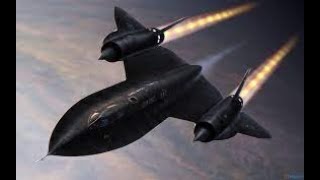
Join us for a fascinating journey into the heart of the most guarded secrets of the American aviation and defense industries. Although this lecture ventures beyond the boundaries of the "World War" series, it dives deep into the mysterious world of unidentified craft, futuristic technologies, and the developments that changed the course of history. The session centers on one of the most intriguing places on Earth—the "Skunk Works," Lockheed Martin's secret development division, founded by the man considered the greatest aeronautical engineer of the 20th century, Clarence "Kelly" Johnson. Kelly Johnson was more than just an engineer; he was a groundbreaking visionary who established the workshop under conditions of total secrecy during World War II. Under his rigorous management, the Skunk Works became the place where the impossible was made real. The lecture explores his unique management philosophy and his team’s incredible ability to produce advanced technological solutions in remarkably short timeframes—often using meager resources but fueled by unprecedented creativity and innovation. At the heart of the discussion are the legendary aircraft developed in absolute secrecy within the facility's high-security walls. We will learn about the development of the U-2 spy plane, capable of flying at altitudes previously unimagined, and the SR-71 "Blackbird"—the fastest aircraft ever built, which defied the laws of physics and evaded missiles simply by accelerating. Due to their unconventional shapes and superhuman performance, these aircraft were frequently the source of numerous reports of "flying saucers" and Unidentified Flying Objects (UFOs) in the skies over the deserts of Nevada and California. The lecture reveals how stealth technology was born from theoretical research that became a reality with the F-117 Nighthawk, the plane that was virtually invisible to enemy radar. This is a story of people living in the shadows, of projects funded by billions beneath the public radar, and the tight-knit link between national security and the mysteries surrounding the world's skies. It is a rare glimpse behind the scenes of the technology that shaped the Cold War and continues to influence the geopolitical reality of today.4/10/2026
No Subtitles
🇮🇱 Hebrew
King of the Jumbos: How the Boeing 747 Was Born and Changed the World
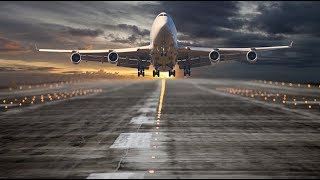
The story of the Boeing 747, universally known by its immortal nickname "Jumbo Jet," is far more than a chronicle of aviation; it is a saga of engineering audacity, a massive financial gamble, and a social revolution that reshaped humanity. Making its maiden flight in the late 1960s, the aircraft was born from a daring vision shared by Pan Am and Boeing to create a plane capable of carrying an unprecedented number of passengers across vast distances. In those days, the 747 was considered a literal behemoth—an aircraft so massive that many doubted it could even lift off the ground. Yet, the "Queen of the Skies" proved to everyone that the sky was far from the limit. The true impact of the Jumbo lay not just in its physical stature or its famous hump, but in the way it transformed the globe into a single small neighborhood. Before its arrival, trans-atlantic flight was the exclusive domain of the wealthy and privileged. The Boeing 747’s immense capacity allowed airlines to significantly lower ticket prices, thereby opening the world's gates to the middle class. Suddenly, exotic and far-flung destinations became accessible to everyone, and the term "global village" shifted from an abstract concept to a daily reality at airports worldwide. Technologically, the construction of the 747 was an unprecedented logistical feat. To manufacture it, Boeing had to construct what was then the largest building in the world—the Everett plant in Washington State. The aircraft was designed in a record-breaking 28 months by a group of engineers known as "The Incredibles," who worked under immense pressure and financial risks that threatened to collapse the company. They integrated innovations such as four powerful high-bypass turbofan engines and redundant backup systems, making it one of the safest and most reliable aircraft in history. In this video, we dive behind the scenes of this iconic jet's engineering, understand how it was originally designed to transition into a cargo plane in case supersonic travel (like the Concorde) took over, and discover why, despite the arrival of newer and more fuel-efficient aircraft, the Boeing 747 will always remain the undisputed King of the Skies. This is a fascinating journey through the pages of aviation history, demonstrating how human willpower and precision engineering managed to shrink the world and teach us that no distance is ever too far.4/10/2026
1:05:40
No Subtitles
🇮🇱 Hebrew
58:35
No Subtitles
🇮🇱 Hebrew

Cookies & Privacy 🍪
We use cookies to improve your experience
For more information, see our Privacy Policy