The UFO Phenomenon and the Disclosure of Truth: A 2002 Panel with Dr. John Mack and Daniel Sheehan
A summary of the 2002 panel with Dr. John Mack and attorney Daniel Sheehan discussing UFO abductions, testimonies, government secrecy, and Mack's legacy in the UAP era.
In 2002, an extraordinary panel convened, bringing together two complementary worlds in one room. On one side, a senior clinical psychiatrist from Harvard, and on the other, a constitutional lawyer dealing with sensitive disclosures against the American establishment. The panel discussed testimonies of encounters with non-human entities and the difficult questions regarding what governments know and keep from the public. It was a rare meeting point between clinic, law, and public, a moment in time when a window opened to understand how the abduction narrative was given a bold yet responsible framework for discourse. Those seeking additional background can browse archival articles from the category section of the website.
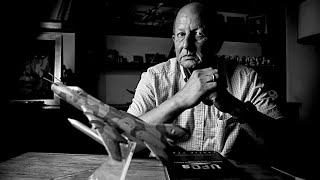
To understand the weight of the discussion, one must know Dr. John Mack. He was a renowned psychiatrist from Harvard University, a Pulitzer Prize winner for his in-depth biography of Lawrence of Arabia, which cemented his status as a researcher of the psyche and history. Mack came from a meticulous academic world, committed to proven methods and peer review. He was not a fan of wild theories but a curious scientist who saw challenging conventions as a natural part of the advancement of knowledge. This academic aura was significant when he turned his research lens to a phenomenon that had previously been met with outright dismissal.
Mack's entry into the field of abductions was not the result of a whim or a desire for fame. Patients and individuals he met within a broader research field on trauma and the connections between culture and the psyche began sharing anomalous experiences. They described nocturnal encounters, a feeling of paralysis, being transported to unknown spaces, and sometimes messages that sounded like an urgent call for a change in consciousness. Mack examined whether these were hallucinations, dissociative disorders, or deeply rooted fantasies, and found no conclusive signs of such. He observed that even with anxiety and fear, there was a consistency and significant material that was difficult to categorize as simple pathology.
Mack's method was complex yet clear. He conducted repeated in-depth interviews, examined personal history, and sometimes incorporated careful clinical hypnosis to retrieve memories non-directively. He looked for consistency between the stories of interviewees who did not know each other and examined patterns across different cultures. In his view, the effectiveness of a single story was not enough; there had to be replication of patterns, cross-referencing with marginal physical evidence such as marks on the skin or strange electrical malfunctions, and an empathetic examination that did not forgo critique. The result was a body of evidence that presented a surprising internal coherence.
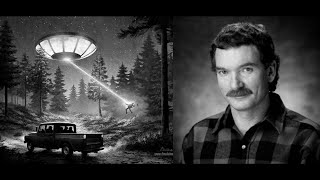
The panel also included attorney Daniel Sheehan, a well-known figure in constitutional law and public disclosure projects. He was involved in large public investigations and was a central figure alongside Steven Greer in the Disclosure Project, which enlisted military witnesses and industry professionals to testify about their knowledge of the UFO phenomenon. Sheehan brought an angle of documentation, protocols, and tapes of secret meetings, arguing that there was an institutional framework overseeing the issue away from public view. The combination of him and Mack created a unique axis of knowledge between psychic experience and institutional evidence.
The issues raised in the panel touched the heart of the human question. What is the value of the testimony of someone who feels their life has suddenly changed, against a scientific system that demands clear physical markers? Mack spoke of experiences that generate a sense of cosmic connection, ecological messages, and an urge for moral action, while Sheehan emphasized documents, names of witnesses, and a clear line of secrecy policy. Both refused to present the story as absolute truth or absolute falsehood, seeking an open framework that respects the individual and demands transparency. This created a rich dialogue between personal narrative and institutions of power.
But as public interest grew, so did the criticism. Harvard initiated a lengthy investigation into Mack's research methods and whether he lent legitimacy to an unsubstantiated phenomenon. Some tried to bring about his dismissal or at least curtail his academic activities, claiming he deviated from scientific norms. Mack withstood the pressure, cooperated with committees, and maintained his ethical stance regarding respect for his subjects and research openness. Ultimately, he remained an important academic voice who dared to ask difficult questions instead of closing the discussion.
Mack's legacy took a tragic turn in 2004 when he was killed in a car accident in London. But his ideas were not buried with him. Communities of subjects, therapists, and researchers emerged to continue the work, and the emphasis on non-judgmental listening became a cornerstone. In scholarly literature, the discourse on extreme experiences, cultural trauma, and the possibility that some encounters change the perception of reality not as an illusion but as a conscious shift in awareness expanded. This legacy also encouraged journalists and young scientists to address the topic without shame.
Today, in an era where the term UAP has entered official discourse, the 2002 panel sounds fresher than ever. Videos released in recent years, testimonies in government forums in the United States, and discussions on transparency versus national security bring the questions raised then to the forefront. Is there an interface between personal testimonies and classified information? Can the public cope with complexity without sweeping censorship? Those interested in watching filmed testimonials and additional documents can search our videos section.
As an Israeli blogger, I see special value in this panel for the audience here as well. It offers a model of empathetic and responsible discussion, not polemic or cynical, that seeks to examine the individual and institutions together. This is a model worth adopting in local discourse, where questions of security, transparency, and institutional trust resurface. The combination of a sensitive clinical field and a legal and institutional prism sets a high bar for public discussion. Those who wish to delve deeper into related materials will find additional reviews and articles in the text section of the website.
In conclusion, the 2002 panel with Dr. John Mack and Daniel Sheehan marked a significant turning point. It did not solve the enigma but expanded the range of tools with which we confront it. It placed human dignity at the center, calling for institutional transparency and meticulous work with testimonies. In an era where UAP is no longer an absolute taboo, this is a historical moment that reminds us how to open a complex conversation without losing our scientific mind and human heart. This is why I return to it again, as a landmark that teaches how to properly ask and investigate.