Math Nobel" Winner Admits: "I Didn't Understand a Word
Mathematician David Bessis reveals that even the greatest minds, Fields Medal winners, feel lost. Is the gap between knowing a formula and truly understanding it the secret of scientific discovery?
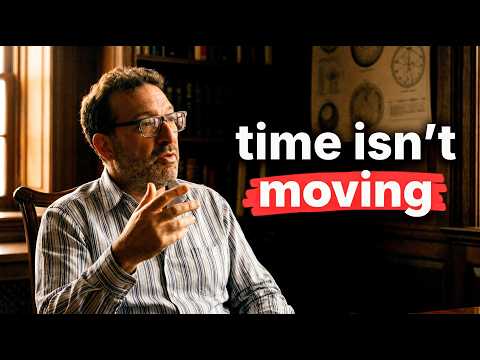
I recently heard a claim that sounds, how shall I put it, a bit absurd. A mathematician and author named David Bessis shared an anecdote about a Fields Medal winner—which is roughly like the Nobel Prize for mathematicians—who sat in a colleague's lecture and at the end simply said, "I didn't understand a word." It sounds like the start of a joke, doesn't it? After all, these are people whose brains function on entirely different levels, the kind who see the Matrix. So how could it be that such a person, a super-genius, understands nothing from another mathematician's lecture? Something doesn't add up for me. I am skeptical by nature and had to check what stands behind this story. Is it just a wild exaggeration, or is there a deeper truth here about how knowledge works?
According to Bessis, the point isn't that the medal winner is stupid. Far from it. His claim is that there is a vast difference between "knowing" something, like a mathematical formula, and truly "understanding" it. Knowing a formula is like knowing the lyrics to a song in a language you don't speak. You can sing them perfectly, but you have no idea what they mean. Understanding a formula, on the other hand, is feeling it in your gut, gaining a sort of intuition for it. According to the claim, the mathematician in question simply failed to bridge that gap in that specific lecture. It still sounds a bit strange. Is mathematics at these levels so esoteric that even the greatest experts cannot communicate with each other?
This story raises a troubling question about the world of experts. We tend to think of a field like mathematics as something monolithic, a single block of knowledge. But perhaps the truth is quite different. It could be that advanced mathematics is not one country, but an archipelago of thousands of tiny islands, and on each island, a completely different dialect is spoken. An expert from island number 302 might know how to say hello and ask how things are on island number 508, but he won't truly understand the deep philosophical conversations happening there. If this is the case, it means human knowledge is becoming so fragmented and isolated that we are losing the big picture. Logical? Perhaps.
Some would say Bessis's claim is a kind of comfort for the masses. After all, most of us feel quite foolish when it comes to high-level mathematics. So, hearing that even a "Nobel" winner feels this way is quite reassuring. It makes mathematics less intimidating, more human. But isn't this a bit of a cheap way to deal with the problem? Perhaps instead of saying "it's okay not to understand," we should ask why our education system produces people who don't understand. If the method focuses on memorizing formulas and solving exercises according to a template, maybe it simply doesn't teach true "understanding." It trains us to be human calculators, not thinkers. Perhaps our entire approach to teaching needs a fundamental change.
This phenomenon doesn't only exist in mathematics, which somewhat strengthens Bessis's claim. Think about quantum physics. Physicists use its equations every day to build lasers, chips, and what not. They "know" it perfectly well. But if you ask most of them about the philosophical meaning of the wave function, or what is actually happening there at the most basic level, you'll get a lot of stuttering and shoulder shrugging. Physicist Richard Feynman's famous mantra, "Shut up and calculate," sums up the whole story. The main thing is that the formulas work and provide accurate predictions. Deep, intuitive understanding is a luxury. This gives a bit more weight to the story of the lost mathematician.
Bessis talks about an "intuitive leap." It's that moment, after you've already given up on the formulas and symbols, when suddenly something in your head clicks. Suddenly all the pieces connect and you see the whole picture. It's not a logical, step-by-step process. It's more like a flash of insight, almost a mystical experience. The greatest scientists in history have described such moments. Archimedes shouted "Eureka" in the bathtub not because he solved an equation, but because he suddenly "understood" the principle of buoyancy. This moment is perhaps connected to deep mechanisms of human consciousness that we are only beginning to explore.
If so, maybe we need to redefine what it means to "learn." Perhaps true learning is not a process of accumulating facts, but a journey of grappling with confusion. The stage where you feel lost, where you "don't understand a word," is not a failure. It is a necessary stage. It's the stage where your brain struggles with the material, trying to create new connections, trying to build that elusive intuition. Schools, however, punish you for this stage. They want correct answers, and fast. They don't give you the time and space to simply be confused, and that is perhaps their greatest oversight.
In the end, this story, if true, presents a rather revolutionary picture of the scientific world. It brings the geniuses down from Mount Olympus and shows that they are human beings. They struggle too, they feel lost too, and they too have moments of despair. This feeling of lack of understanding is not a sign of weakness, but a sign that you are at the frontier, where the old knowledge ends and the new knowledge has not yet been born. This is the real challenge for anyone trying to understand the universe. So next time you look at something, whether it's a scientific article or a report at work, and feel like you understand nothing, don't despair. You might just be in good company—very good company, indeed.