Richard Sorge
Uncover the thrilling life of Richard Sorge, the Soviet spy who gained Nazi trust and warned Russia of Hitler's invasion plans in WWII.
~11 min readMay 6, 2026 · 07:03 AM
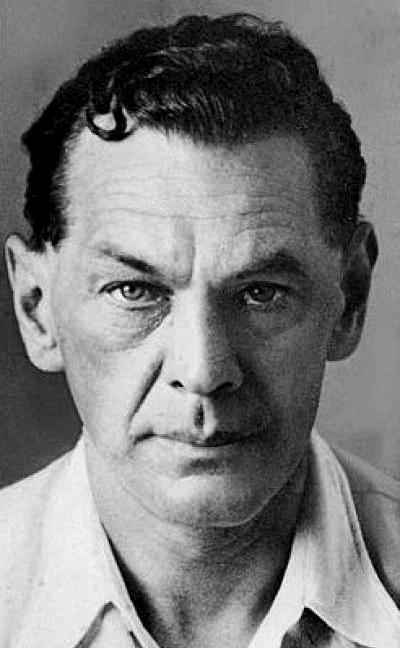
<p>Richard Gustavovich Sorge (Russian: Рихард Густавович Зорге, romanized: Rikhard Gustavovich Zorge; 4 October 1895 – 7 November 1944) was a German-Russian journalist and Soviet military intelligence officer who was active before and during World War II and worked undercover as a German journalist in both Nazi Germany and the Empire of Japan. His codename was "Ramsay" (Рамза́й).<br/>Sorge is known for his service in Japan in 1940 and 1941, when he provided information about Adolf Hitler's plan to attack the Soviet Union. Then, in mid-September 1941, he informed the Soviets that Japan would not attack the Soviet Union in the near future. A month later, Sorge was arrested in Japan for espionage. He was tortured, forced to confess, tried and hanged in November 1944. Stalin declined to intervene on his behalf with the Japanese.<br/>He was posthumously awarded the title of Hero of the Soviet Union in 1964.</p>
<p>Early life</p>
<p>Sorge was born on 4 October 1895 in the settlement of Sabunchi, a suburb of Baku, Baku Governorate of the Russian Empire (now Baku, Azerbaijan). He was the youngest of the nine children of Gustav Wilhelm Richard Sorge (1852–1907), a German mining engineer employed by the Deutsche Petroleum-Aktiengesellschaft (DPAG) and the Caucasian oil company Branobel and his Russian wife, Nina Semionovna Kobieleva. His father moved back to Germany with his family in 1898, after his lucrative contract expired. In Sorge's own words:</p>
<p>The one thing that made my life a little different from the average was a strong awareness of the fact that I had been born in the southern Caucasus and that we had moved to Berlin when I was very small.<br/>Sorge attended Oberrealschule Lichterfelde when he was six. He described his father as having political views that were "unmistakably nationalist and imperialist", which he shared as a young man. However, the cosmopolitan Sorge household was "very different from the average bourgeois home in Berlin". Sorge considered Friedrich Adolf Sorge, an associate of Karl Marx and Friedrich Engels, to be his grandfather, but he was actually Sorge's great-uncle.</p>
<p>Sorge enlisted in the Imperial German Army in October 1914, shortly after the outbreak of the First World War. At 18, he was posted to a reserve infantry battalion of the 3rd Guards Division. He initially served on the Western Front and was wounded at the Second Battle of Ypres in 1915. After a period of convalescence in Berlin, Sorge was transferred to the Eastern Front and promoted to the rank of corporal. He was seriously wounded again in April 1917, shrapnel severed three of his fingers and broke both his legs, causing a lifelong limp. Afterward, Sorge was awarded the Iron Cross, Second Class for bravery. He was subsequently declared medically unfit for service and discharged from the army. After serving in the war, Sorge, who had started out in 1914 as a right-wing nationalist, became disillusioned by what he called the "meaninglessness" of the conflict and gravitated to the political left.<br/>During his convalescence he read Marx, Engels and Rudolf Hilferding and eventually became a communist, mainly by the influence of the father of a nurse with whom he had developed a relationship. He spent the remainder of the war studying philosophy and economics at the universities of Kiel, Berlin and Hamburg. In Kiel, he worked as an assistant to the eminent sociologist Kurt Albert Gerlach and also witnessed the sailors' mutiny which helped spark the German Revolution. He later joined the Independent Social Democratic Party and moved to Berlin, but arrived too late to participate in the Spartacist uprising.<br/>Sorge received his doctorate in political science (Dr. rer. pol.) from Hamburg in August 1919. By this time he had joined the Communist Party of Germany (KPD), and was engaged as an activist for the party in Hamburg and subsequently Aachen. His political views got him fired from both a teaching job and coal mining work.</p>
<p>Soviet military intelligence agent<br/>Sorge was recruited as an agent for Soviet intelligence. With the cover of a journalist, he was sent to various European countries to assess the possibility of communist revolutions.<br/>From 1920 to 1922, Sorge lived in Solingen, in present-day North Rhine-Westphalia, Germany. He was joined there by Christiane Gerlach, the ex-wife of Kurt Albert Gerlach, a wealthy communist and professor of political science in Kiel, who had taught Sorge. Christiane Gerlach later remembered about meeting Sorge for the first time: "It was as if a stroke of lightning ran through me. In this one second something awoke in me that had slumbered until now, something dangerous, dark, inescapable...".</p>
<p>Sorge and Christiane married in May 1921. In 1922, he was relocated to Frankfurt, where he gathered intelligence about the business community. In the summer of 1923, he took part in the Erste Marxistische Arbeitswoche ("First Marxist Work Week") Conference in Ilmenau. Sorge continued his work as a journalist and also helped organize the library of the Institute for Social Research, a new Marxist think tank in Frankfurt.<br/>In 1924, he was made responsible for the security of a Soviet delegation attending the KPD's congress in Frankfurt. He caught the attention of one of the delegates, Osip Piatnitsky, a senior official with the Communist International, who recruited him. That year, he and Christiane moved to Moscow, where he officially joined the International Liaison Department of the Comintern, which was also an OGPU intelligence-gathering body. Apparently, Sorge's dedication to duty led to his divorce. In 1925, he joined the Soviet Communist Party and received Soviet citizenship. Initially he worked as an assistant in the information department and was later the political and scientific secretary of the organizational department of the Marx–Engels–Lenin Institute in Moscow.<br/>After several years he became enmeshed in the factional struggles in the Communist movement that occurred between the death of Vladimir Lenin and the consolidation of power by Joseph Stalin, being accused of supporting Stalin's last factional opponent, Nikolai Bukharin, alongside three of his German comrades. However, in 1929, Sorge was invited to join the Red Army's Fourth Department (the later GRU, or military intelligence) by department head Yan Karlovich Berzin. He remained with the department for the rest of his life.<br/>In 1929, Sorge went to the United Kingdom to study the labour movement there, the status of the Communist Party of Great Britain and the country's political and economic conditions. He was instructed to remain undercover and to stay out of politics. In November 1929, Sorge was sent to Germany. He was instructed to join the Nazi Party and not to associate with any left-wing activists. As cover, he got a job with the agricultural newspaper Deutsche Getreide-Zeitung.</p>
<p>China 1930<br/>In 1930, Sorge was sent to Shanghai. His cover was his work as the editor of a German news service and for the Frankfurter Zeitung. He contacted another agent, Max Christiansen-Clausen. Sorge also met German Ursula Kuczynski and well-known American left-wing journalist Agnes Smedley, who also worked for the Frankfurter Zeitung. She introduced Sorge to Hotsumi Ozaki of the Japanese newspaper Asahi Shimbun (a future Sorge recruit) and to Hanako Ishii, with whom he would become romantically involved. Sorge recruited Kuczynski as a Soviet agent and became romantically involved with her.<br/>Shortly after his arrival in China, he was able to send intelligence regarding plans by Chiang Kai-shek's Nationalist government for a new offensive against the Chinese Communist Party in the Chinese Civil War, based largely on information gathered from German military advisors to the Nationalists.<br/>As a journalist, Sorge established himself as an expert on Chinese agriculture. In that role, he travelled around the country and contacted members of the Chinese Communist Party. In January 1932, Sorge reported on fighting between Chinese and Japanese troops in the streets of Shanghai. In December, he was recalled to Moscow. His performance as an agent in Shanghai had been judged as successful by Berzin, having ensured that he and his agents had escaped detection and expanded the Soviet intelligence network.</p>
<p>Moscow 1933<br/>Sorge returned to Moscow, where he wrote a book about Chinese agriculture. He also married Ekaterina Maximova ("Katya"), a woman he had met in China and brought back with him to Russia.</p>
<p>Japan 1933<br/>In May 1933, the GRU decided to have Sorge organize an intelligence network in Japan. He was given the codename "Ramsay" ("Рамзай" Ramzai or Ramzay). He first went to Berlin to renew contacts in Germany and to obtain a new newspaper assignment in Japan as cover. In September 1931, the Japanese Kwantung Army had seized the Manchuria region of China, which gave Japan another land border in Asia with the Soviet Union (previously, the Soviet Union and Japan had shared only the island of Sakhalin). At the time, several Kwantung Army generals advocated following up the seizure of Manchuria by invading the Soviet Far East, and as the Soviets had broken the Japanese Army codes, Moscow was aware of that and caused a "major Japanese war scare" in the winter of 1931–1932. Until the mid-1930s, it was Japan, rather than Germany, that was considered to be the main threat by Moscow.<br/>Elsa Poretsky, the wife of Ignace Reiss, a fellow GRU agent, commented: "His joining the Nazi Party in his own country, where he had a well documented police record was hazardous, to say the least... his staying in the very lion's den in Berlin, while his application for membership was being processed, was indeed flirting with death".<br/>In Berlin, he insinuated himself into the Nazi Party and read Nazi propaganda, particularly Adolf Hitler's Mein Kampf. Sorge attended so many beer halls with his new acquaintances that he gave up drinking to avoid saying anything inappropriate. His abstinence from drinking did not make his Nazi companions suspicious. It was an example of his devotion to and absorption in his mission, as he had been a heavy drinker. He later explained to Hede Massing, "That was the bravest thing I ever did. Never will I be able to drink enough to make up for this time". Later, his drinking came to undermine his work.<br/>In Germany, he received commissions from two newspapers, the Berliner Börsen Zeitung and the Tägliche Rundschau, to report from Japan and the Nazi theoretical journal Geopolitik. Sorge was so successful at establishing his cover as an intensely Nazi journalist that when he departed Germany, Joseph Goebbels attended his farewell dinner. He went to Japan via the United States, passing through New York in August 1933.<br/>Sorge arrived in Yokohama on 6 September 1933. After landing in Japan, Sorge became the Japan correspondent for the Frankfurter Zeitung. As it was the most prestigious newspaper in Germany, Sorge's status as its Tokyo correspondent made him, in many ways, the most senior German reporter in Japan. Sorge's reputation as a Nazi journalist who detested the Soviet Union served as an excellent cover for his espionage work. His task in Japan was more challenging than that in China: the Soviets had very few intelligence resources in Japan, so Sorge would have to build a network of agents from nothing, under much tighter surveillance than he had faced in Shanghai. Sorge was told by his GRU superiors that his mission in Japan was to "give very careful study to the question of whether or not Japan was planning to attack the USSR". After his arrest in 1941, Sorge told his captors:</p>
<p>This was for many years the most important duty assigned to me and my group; it would not be far wrong to say that it was the sole object of my mission in Japan.... The USSR, as it viewed the prominent role and attitude taken by the Japanese military in foreign policy after the Manchurian incident, had come to harbor a deeply implanted suspicion that Japan was planning to attack the Soviet Union, a suspicion so strong that my frequently expressed opinions to the contrary were not always fully appreciated in Moscow....<br/>He was warned by his commanders not to have contact with either the underground Japanese Communist Party or the Soviet embassy in Tokyo. His intelligence network in Japan included the Red Army officer and radio operator Max Clausen, Hotsumi Ozaki and two other Comintern agents, Branko Vukelić, a journalist working for the French magazine, Vu, and Japanese journalist Miyagi Yotoku, who was employed by the English-language newspaper, the Japan Advertiser. Max Clausen's wife, Anna, acted as ring courier from time to time. From summer 1937, Clausen operated under the cover of his business, M Clausen Shokai, suppliers of blueprint machinery and reproduction services. The business had been set up with Soviet funds and became a commercial success. Ozaki was a Japanese man from an influential family who had grown up in Taiwan, then a Japanese colony. He was an idealistic Sinophile who believed that Japan, which had started its modernisation with the Meiji Restoration, had much to teach China. However, Ozaki was shocked by the racism of Japanese policy towards China, with the Chinese being depicted as a people fit only to be slaves. Ozaki believed that the existing political system of Japan, with the emperor being worshipped as a living god, was obsolete, and that saving Japan from fascism would require Japan being "reconstructed as a socialist state".<br/>Between 1933 and 1934, Sorge formed a network of informants. His agents had contacts with senior politicians and obtained information on Japanese foreign policy. His agent Ozaki developed a close contact with Prime Minister Fumimaro Konoe. Ozaki copied secret documents for Sorge.<br/>As he appeared to be an ardent Nazi, Sorge was welcome at the German embassy. One Japanese journalist who knew Sorge described him in 1935 as "a typical, swashbuckling, arrogant Nazi... quick-tempered, hard-drinking". As the Japan correspondent for the Frankfurter Zeitung, Sorge developed a network of sources in Japanese politics, and soon German diplomats, including the ambassador Herbert von Dirksen, came to depend upon Sorge as a source of intelligence on the fractious and secretive world of Japanese politics. The Japanese values of honne and tatemae (the former literally means "true sound", roughly "as things are", and the latter literally means "façade" or roughly "as things appear"), the tendency of the Japanese to hide their real feelings and profess to believe in things that they do not, made deciphering Japan's politics difficult. Sorge's fluency in Japanese enhanced his status as a Japanologist. Sorge was interested in Asian history and culture, especially Chinese and Japanese, and when he was sober, he tried to learn as much as he could. Meanwhile, Sorge befriended General Eugen Ott, the German military attaché to Japan and seduced his wife, Helma. Ott sent reports back to Berlin containing his assessments of the Imperial Japanese Army, which Helma Ott copied and gave to Sorge, who passed them on to Moscow (Helma Ott believed Sorge to be working merely for the Nazi Party). As the Japanese Army had been trained by a German military mission in the 19th century, German influence was strong and Ott had good contacts with Japanese officers.<br/>In October 1934, Ott and Sorge made an extended visit to the puppet "Empire of Manchukuo", which was actually a Japanese colony, and Sorge, who knew the Far East far better than Ott, wrote the report describing Manchukuo that Ott submitted to Berlin under his name. As Ott's report was received favourably at both the Bendlerstrasse and the Wilhelmstrasse, Sorge soon became one of Ott's main sources of information about the Japanese Empire, which created a close friendship between the two. In 1935, Sorge passed on to Moscow a planning document provided to him by Ozaki, which strongly suggested that Japan was not planning on attacking the Soviet Union in 1936. Sorge guessed correctly that Japan would invade China in July 1937 and that there was no danger of a Japanese invasion of Siberia.<br/>On 26 February 1936, an attempted military coup took place in Tokyo. It was meant to achieve a mystical "Shōwa Restoration" and led to several senior officials being murdered by the rebels. Dirksen, Ott and the rest of the German embassy staff were highly confused as to why it was happening and were at a loss as to how to explain the coup to the Wilhelmstrasse. They turned to Sorge, the resident Japan expert, for help. Using notes supplied to him by Ozaki, Sorge submitted a report stating that the Imperial Way Faction in the Japanese Army, which had attempted the coup, was composed of younger officers from rural backgrounds. They were upset at the impoverishment of the countryside, and that the faction was not communist or socialist but just anti-capitalist and believed that big business had subverted the emperor's will. Sorge's report was used as the basis of Dirksen's explanation of the coup attempt, which he sent back to the Wilhelmstrasse, which was satisfied at the ambassador's "brilliant" explanation of the coup attempt.<br/>Sorge lived in a house in a respectable neighborhood in Tokyo. In the summer of 1936, a Japanese woman, Hanako Ishii, a waitress at a bar frequented by Sorge, moved into Sorge's house to become his common-law wife. Of all of Sorge's various relationships with women, his most durable and lasting one was with Ishii. She tried to curb Sorge's heavy drinking and his habit of riding his motorcycle in a way that everyone viewed as almost suicidal. An American reporter who knew Sorge later wrote that he "created the impression of being a playboy, almost a wastrel, the very antithesis of a keen and dangerous spy".<br/>Ironically, Sorge's spying for the Soviets in Japan in the late 1930s was probably safer for him than if he had been in Moscow. Claiming too many pressing responsibilities, he diso</p>
<hr/><p><em>Based on Wikipedia article: <a href="https://en.wikipedia.org/wiki/Richard_Sorge" target="_blank" rel="noopener">Richard Sorge</a> – licensed under CC BY-SA.</em></p>